A whopping figure of £180,000 (INR 2 crore) per annum for Private Tuition was floated by a family based in North London in search of an exceptional and experienced Tutor to guide their youngest child on his first steps toward becoming an English gentleman.
Attraction towards the private tuition is a global phenomenon. India is no exception.
LSE blogpost discusses the educational inequality: What does a £180,000 job ad for a private tutor for a baby reveal about the global education arms race? It’s tempting to put it down to the eccentric indulgence of a tiny global elite. But it in fact points to an explosion in private tutoring.
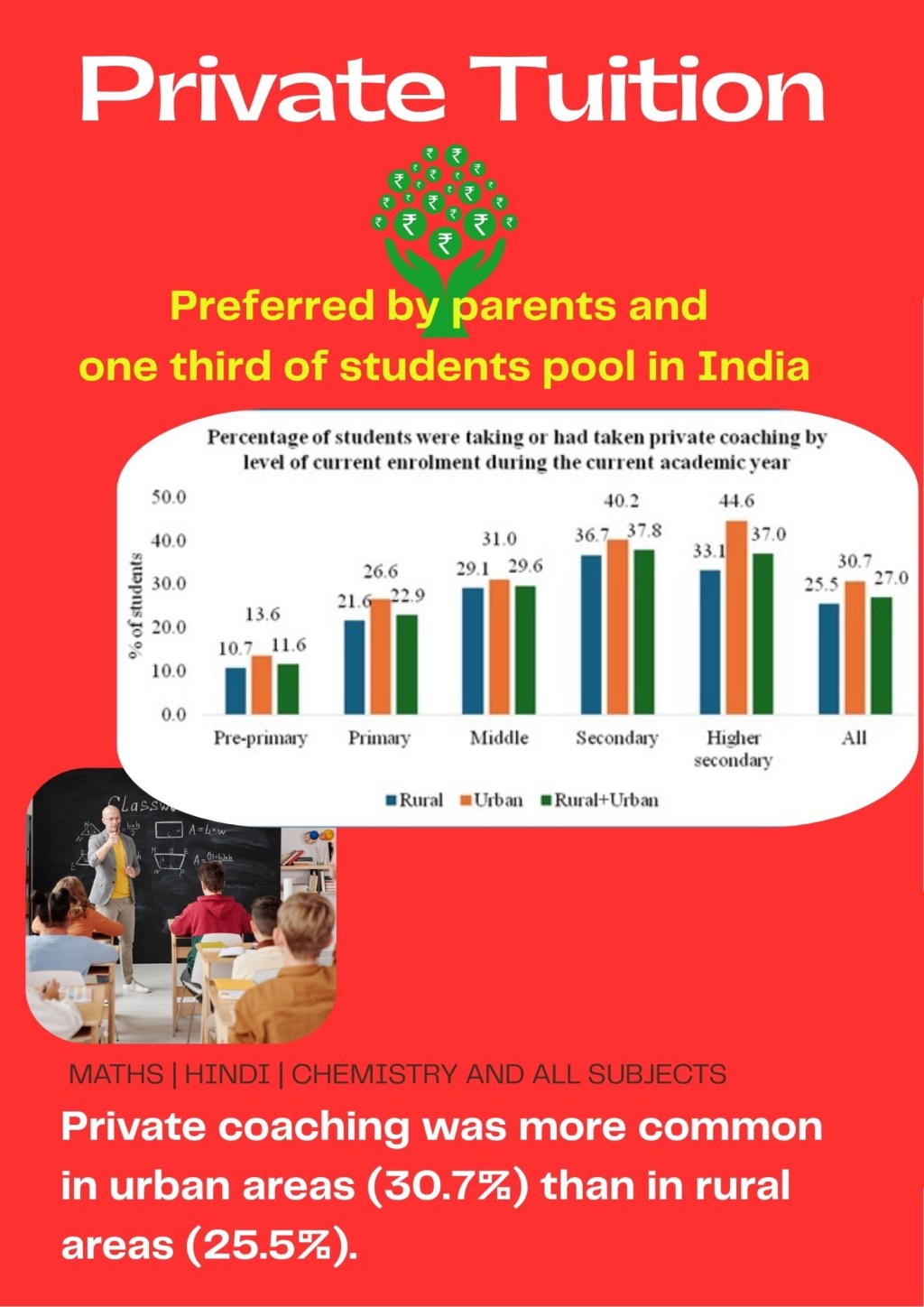
Recently released “Results of Comprehensive Modular Survey: Education, 2025 (April – June, 2025) in India” stated that nearly a third of all students (27.0%) were taking or had taken private coaching during the current academic year. This trend was more common in urban areas (30.7%) than in rural areas (25.5%).

This is a growing concern in India that houses huge population of school students. There is a great divide in accessing the foundational education resources. Households are forced to spend additional finance for the private tuition. Parents have to allocate special budget for preparing their children to appear for higher education entrance tests.
Intention of having private coaching increases as the students progress to secondary and higher secondary education.
A recent National Sample Survey Organisation report shows that thanks to the low quality of education, more and more students are relying on expensive private coaching and tuition. The report estimates that about 11% to 12% of a family’s expenditure goes for coaching classes and tuitions.
A working paper on Pricing Private Education in Urban India: Demand, Use and Impact”, February 2019 discussed the influence of private coaching in the life of school students in India.
It stated that private tutoring is widespread in India. One in five students in the 6th through 8th grade receive private tutoring, along with nearly one in three secondary school students. Students from various socioeconomic backgrounds attend private tuition centers, which provide tutoring on specific subjects, with more urban students (28 percent) receiving services than rural students (17 percent).
Households were less willing to pay for girls to attend private tutoring than boys, by an average of 10 rupees (around US$0.16). When children were already enrolled in private schools, households were less willing to pay for private tutoring by INR 50 (US$0.82), which reveals a trade-off between private schools and private tuition centers. Households’ income levels did not impact their willingness to pay.
According to Comprehensive Modular Survey: Education (2025), Course fees emerges as the largest education expense made by households for education of children
Across all types of schools, the highest average expenditure per student during the current academic year was on course fees (₹7,111), followed by textbooks and stationery (₹2,002) at the all-India level. The urban households paying significantly more across all categories. Notably, the average expenditure on course fees in urban areas was estimated at ₹15,143, whereas it was estimates at ₹3,979 in rural areas. This trend of higher expenditure in urban areas also evident for other types of education related expenses like transportation, uniforms, and textbooks.
Students in the rural schools have to depend on the academic resources provided by the school management. UDISE data: No. of Schools 14.71 Lakh with Urban count of
2.61 Lakh and Rural has 12.10 Lakh.
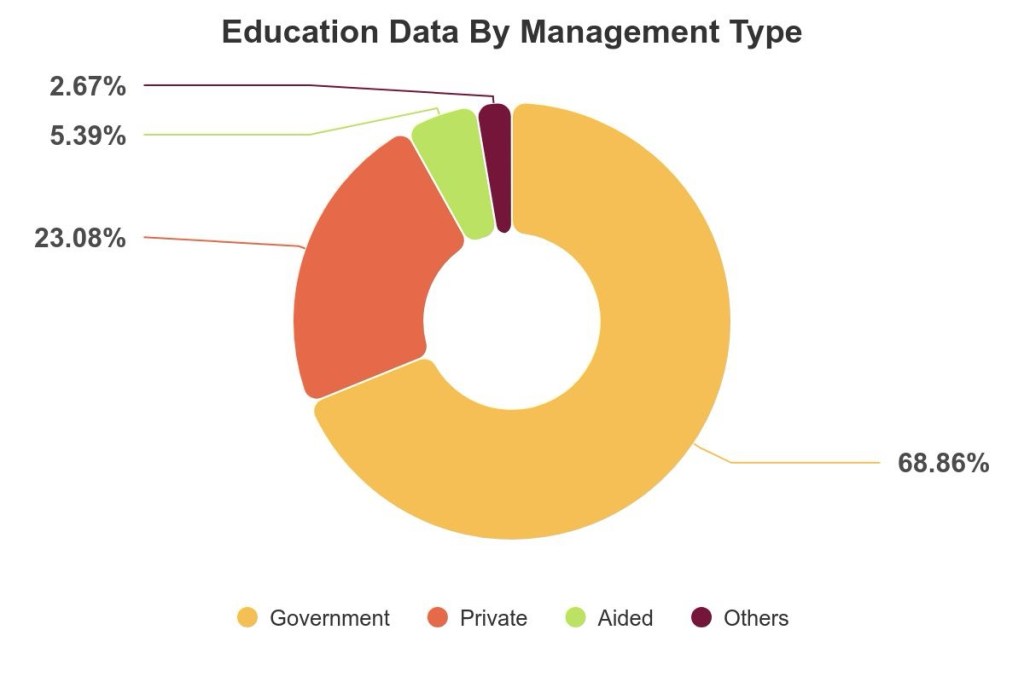
Rural households are forced to allocate additional budget for getting the extra coaching through private tuitions. Access to educational resources is very limited for the rural students. Private schools have their own pattern of delivering the academic curriculum at a cost higher than the government-aided and government schools. Government-aided schools depend on philanthropic support from the local community.
SDG 4 Quality Education scorecard for India is not an encouraging one at this time. Several reforms are required to bring Education Equity. 2025 ranking showed that Challenges remain and India is moderately improving with insufficient resources to attain goal.
In the absence of adequate teaching available within the school education framework, the students are forced to look for the channels that deliver “Extra value” coaching.
 முப்பரிமாணம் (Mupparimanam) - 3D development for connecting the ancient and modern thinking with UN SDGs Sustainable Development Goals. 3D thinking on Tamil Literature and Traditional Practices, the source of Global Goals.
Leave a comment