
The world is extremely unequal
World Inequality Report 2026 released in December 2025 reveals extreme global inequality, with the richest 10% taking 53% of income, the bottom 50% getting just 8%, and wealth even more concentrated (top 10% hold 75%).
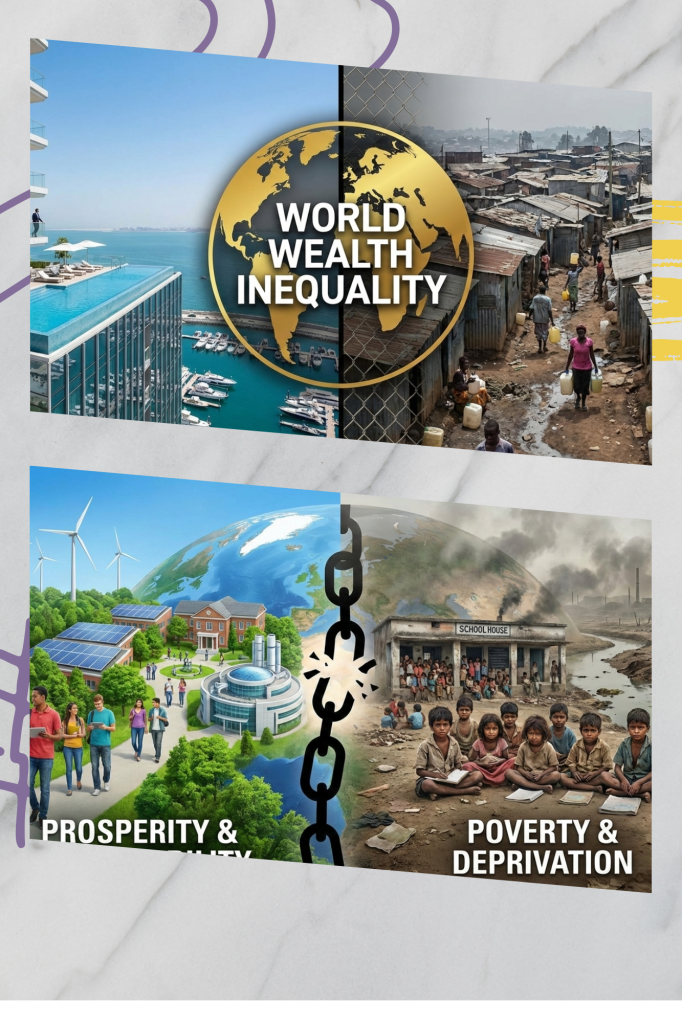
The World Inequality Report 2026 (WIR 2026) marks the third edition in this flagship series, following the 2018 and 2022 editions. These reports draw from the work of over 200 scholars from all over the world, affiliated with the World Inequality Lab and contributing to the largest database on the historical evolution of global inequality.
World Inequality is severely impacting the global economic, social and environmental growth.
The first and most striking fact emerging from the data is that inequality remains at very high levels.
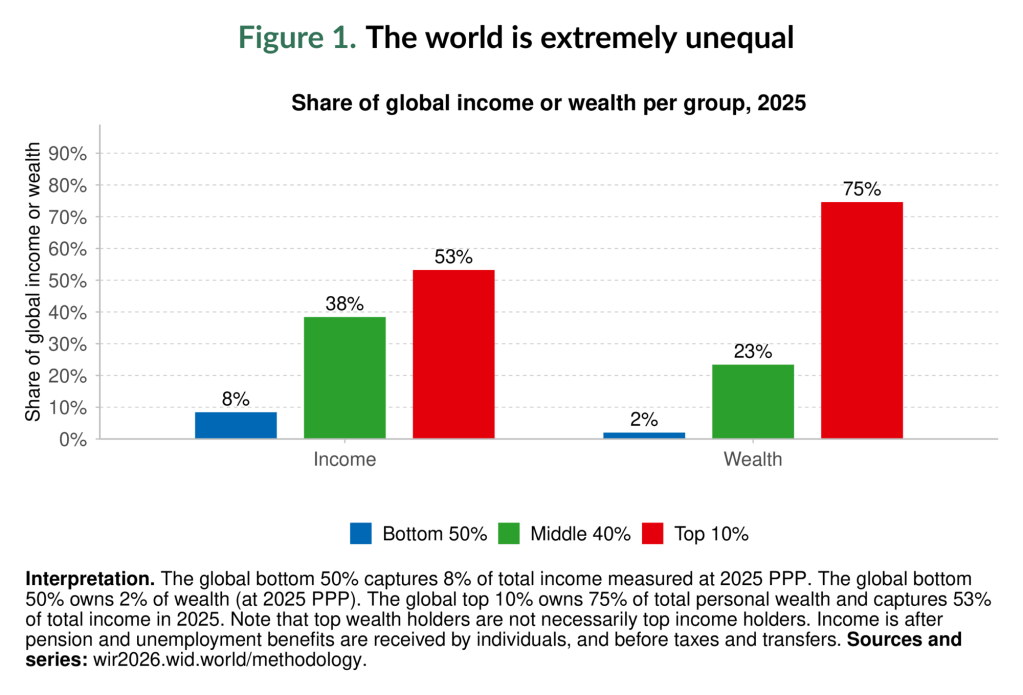
Figure 1 illustrates that, today, the top 10% of the global population’s income-earners earn more than the remaining 90%, while the poorest half of the global population captures less than 10% of the total global income. Wealth is even more concentrated: the top 10% own three-quarters of global wealth, while the bottom half holds only 2%.
Key findings highlight that the ultra-rich’s wealth grows much faster than the poor’s, women’s share of labor income barely budges, and climate change exacerbates these divides, requiring urgent policy shifts like banning fossil fuel investments and taxing carbon assets to tackle this crisis.
The global wealthiest 10% of individuals account for 77% of global emissions associated with private capital ownership, underscoring how the climate crisis is inseparable from the concentration of wealth
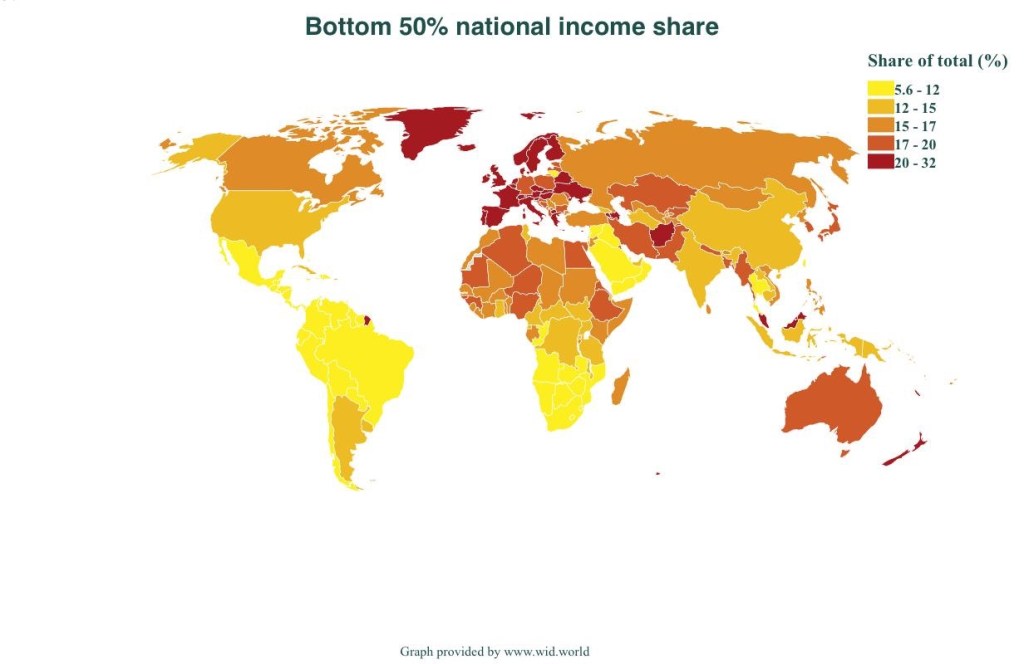
Europe and much of North America & Oceania are among the least unequal, though even here, the top groups capture far more wealth than the bottom half. The United States stands out as an exception, with higher levels of inequality than its high-income peers. At the other end of the spectrum, Latin America, southern Africa, and the Middle East & North Africa combine low incomes for the bottom 50% with extreme concentration at the top, which yields some of the highest T10/B50 income gaps worldwide.

India’s Wealth Inequality
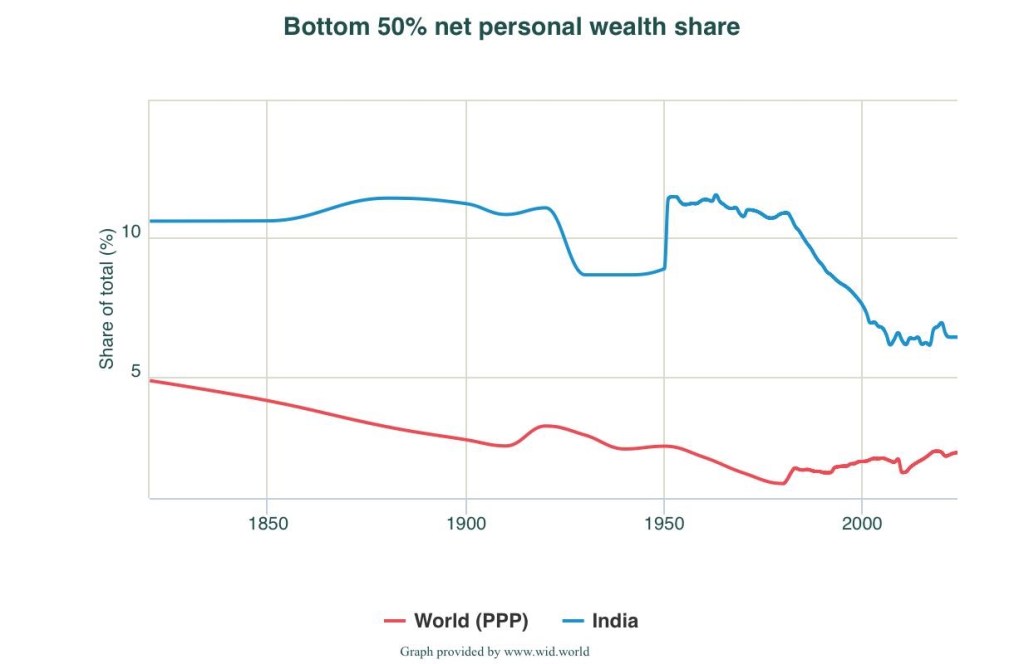
India is severely impacted in terms of economic, social and environmental growth due to the great divide in income and wealth accumulation patterns. Several studies in the global stage depicted the impacts of wealth inequality on the most important national needs such as economic development, socioeconomic growth and access to education.

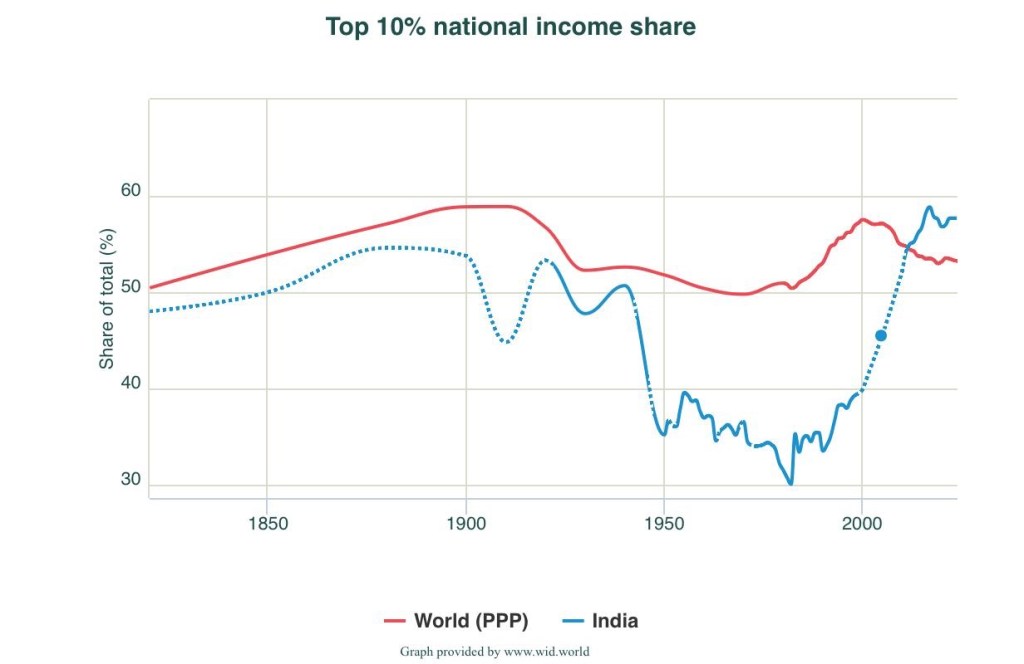
According to Industry Insights on “Income Inequality and the Earnings Gap Between Educated and Non-Educated Workers”, Several economists claim that income inequality hurts economic growth, economic and financial stability, and productivity and economic efficiency (Fletcher, 2014; Sherman, 2014). Joseph Stiglitz, a Nobel Prize winning economist, states, “We are paying a high price for the inequality that is increasingly scarring our economy — lower productivity, lower efficiency, lower growth”.
Wealth Inequality and Education
Wealth inequality severely impacts education by creating unequal access to early learning, resources, and quality schools, leading to vast achievement gaps, lower college enrollment/completion for the poor, increased stress, and reduced social mobility, effectively trapping disadvantaged students and perpetuating cycles of poverty.
How Does Wealth Inequality Shape Children’s Education?
Wealth inequality affects children even before they step into a classroom. Low-income families often lack access to quality early childhood education, nutritious food, and stable housing, the essentials that support brain development and learning readiness. Wealthier children are more likely to start school with stronger vocabularies, better focus, and more support at home.
Corruption and extreme wealth
Extreme wealth, that of at least one billion dollars owned by a person or family, is a growing phenomenon in the world with potential effects on social, political and economic dimensions. Simultaneously, corruption -misuse of delegated power for private gain- occurs in all countries of the world. Although it is recognized that the origin of extreme wealth it is associated with own efforts and legal mechanisms (company founders, top executives, investments, etc.), there seems to be a relationship between extreme wealth and corruption.
Harvard University article on “A Comparative Study of Inequality and Corruption” argues that income inequality increases the level of corruption through material and normative mechanisms. The wealthy have both greater motivation and more opportunity to engage in corruption, whereas the poor are more vulnerable to extortion and less able to monitor and hold the rich and powerful accountable as inequality increases. Inequality also adversely affects social norms about corruption and people’s beliefs about the legitimacy of rules and institutions, thereby making it easier for them to tolerate corruption as acceptable behavior.
Connection between Water and Shared Prosperity
Wealth inequality severely restricts water access, forcing the poor to pay disproportionately high prices for unsafe water, leading to poor health, disease, and deeper poverty, while the wealthy often bypass centralized systems for private, high-quality sources, exacerbating the gap and limiting resources for universal access. This creates a cycle where poverty causes worse water access, which in turn deepens poverty, affecting everything from health to education.
Population in wealthier nations where clean water flows freely at the turn of a tap spend less than 0.1% of their income on water, so little that it doesn’t even register as an expense for most people.
Conclusion
Top 10% in India must have a fire in the belly for bringing India’s equitable wealth and economic growth to strengthen India’s education, socioeconomic development and natural resources wealth.
 முப்பரிமாணம் (Mupparimanam) - 3D development for connecting the ancient and modern thinking with UN SDGs Sustainable Development Goals. 3D thinking on Tamil Literature and Traditional Practices, the source of Global Goals.
Leave a comment