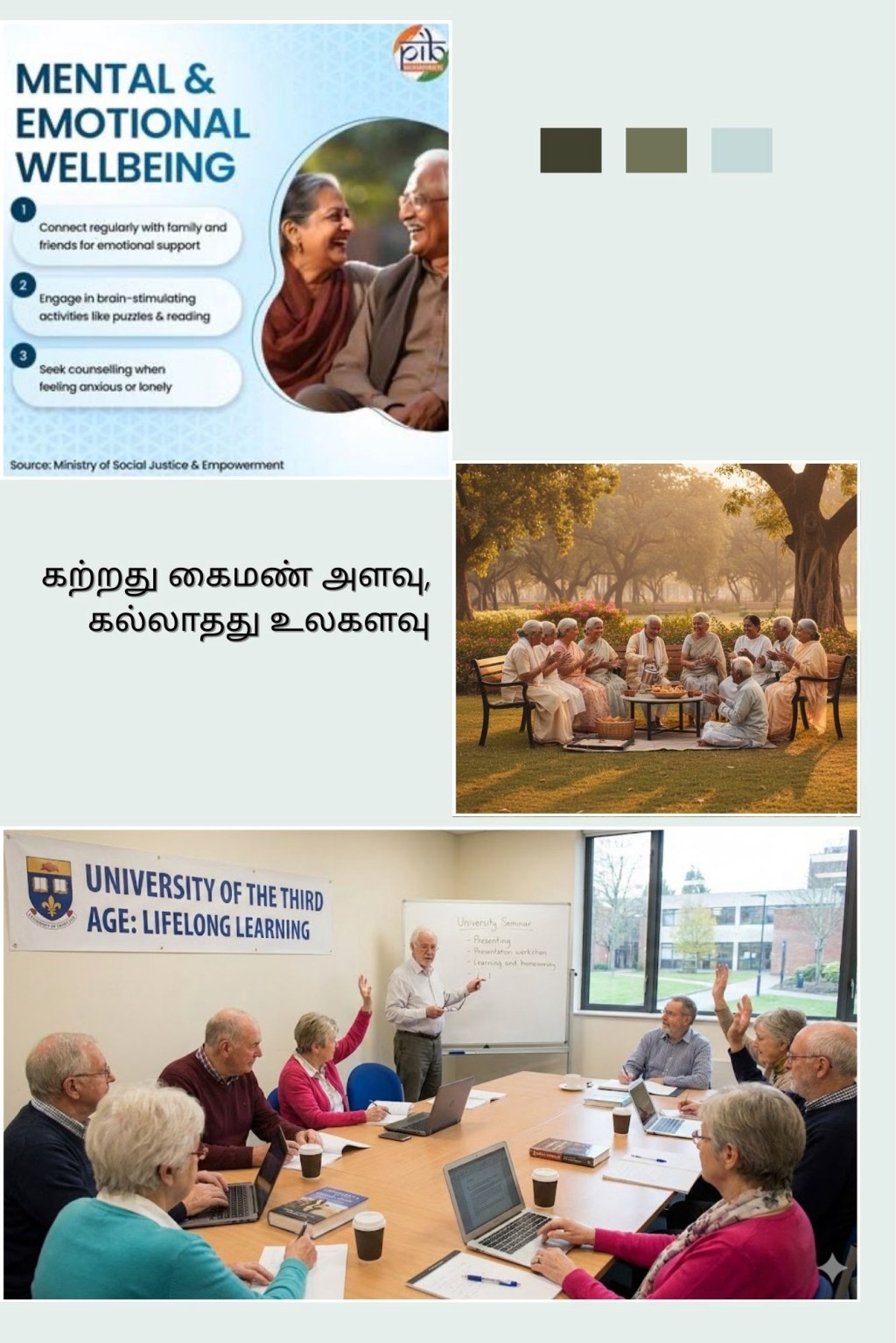
கற்றது கைமண் அளவு, கல்லாதது உலகளவு.
Ministry of Statistics and Program Implementation analysis showed that India’s population, which reached 1211 million in 2011 and projected to reach 1363 million in 2021 makes India one of the youngest countries in the world. India has a relatively young population with a median age of 28.4 years. Approximately 26% of the population is below 14 years and ~67% is between the age of 15 to 64 years and 7% above the age of 65.
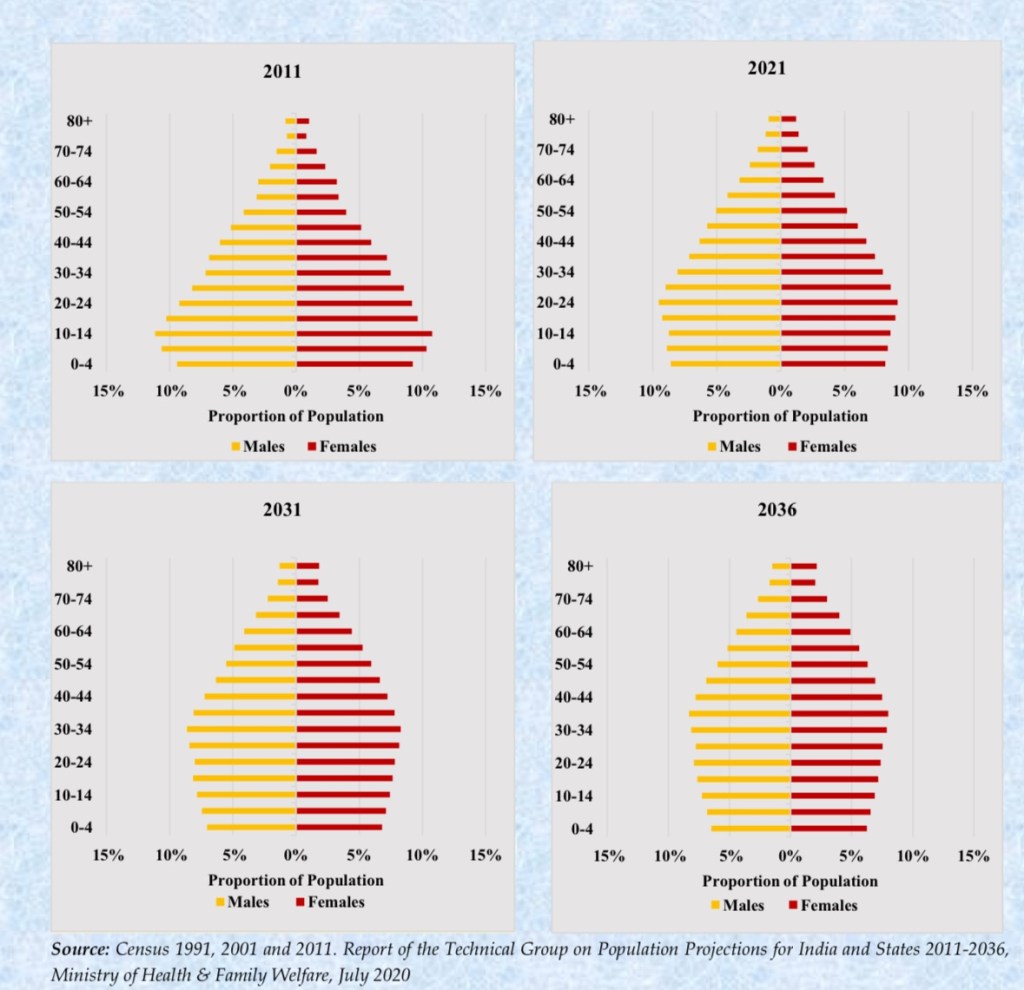
India’s Aging Population
United Nations Population Fund’s 2023 India Ageing Report projected that the population of people aged 80+ years will grow at a rate of around 279% between 2022 and 2050
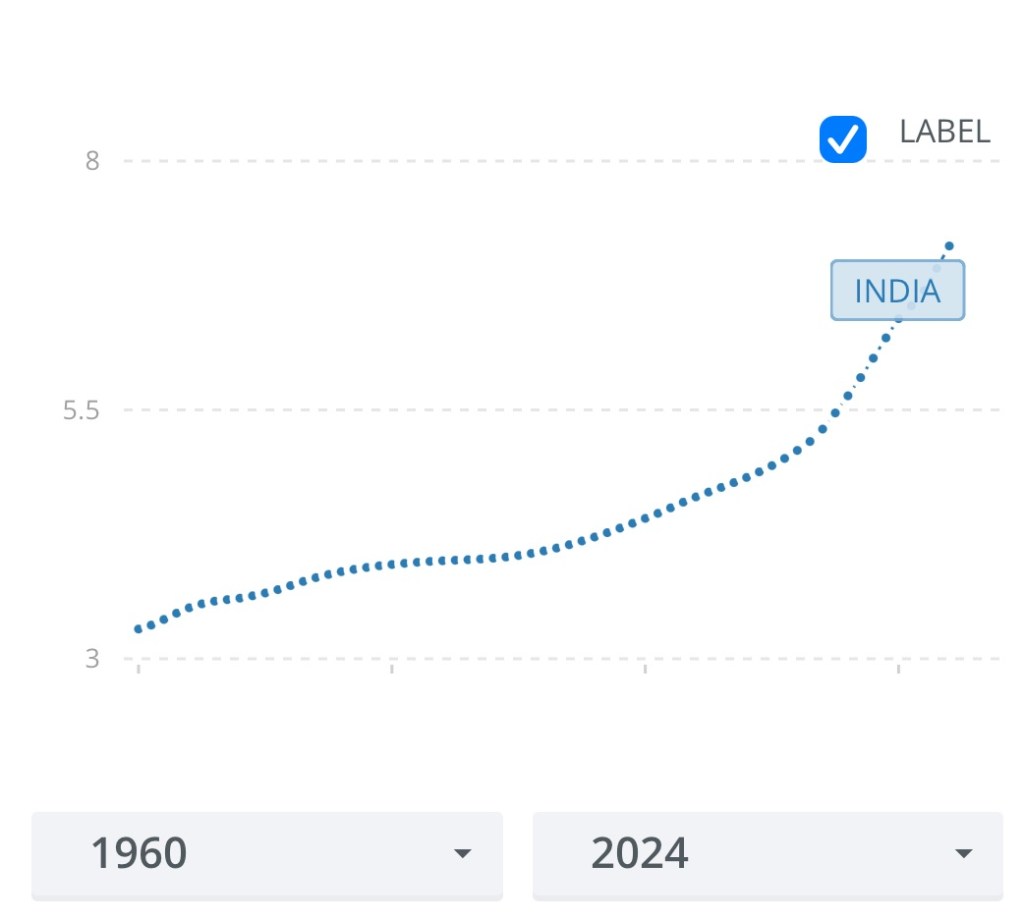
Population ages 65 and above (% of total population) – India
World Population Prospects, United Nations ( UN ), publisher: UN Population Division
Over 40% poorest
More than 40% of the elderly in India are in the poorest wealth quintile, with about 18.7% of them living without an income, the report said, adding that such levels of poverty may affect their quality of life and healthcare utilisation.
According to Press Information Bureau, India is undergoing a rapid demographic transition, with the elderly population (60 years and above) projected to more than double from100 million in 2011 to 230 million by 2036. This evolution indicates that by 2036, nearly one in seven Indians will be aged 60 years or older.
Government Initiatives for Elderly in India
The Government of India has undertaken numerous initiatives, policies, and action plans to tackle the challenges encountered by the elderly population.
While India focuses on silver economy valued at approximately seventy-three thousand crore rupees in 2024, with projections indicating substantial multi-fold growth in the years ahead, the lifelong education programs are equally important for enhancing the mental and social wealth of senior citizens in India. Research identifies senior citizens, along with professionals in the 45 to 64 age bracket, as the ‘wealthiest age cohort’ globally.
Press Information Bureau press release in February 2022 stated that Government approved a new scheme New India Literacy Programme for the period FYs 2022-2027 to cover all the aspects of Adult Education to align with National Education Policy 2020 and Budget Announcements 2021-22. The National Education Policy 2020 has recommendations for Adult Education and Lifelong Learning.
The scheme will be implemented through volunteerism through online mode. The training, orientation, workshops of volunteers, may be organized through face-to-face mode.
Higher Education for Senior Citizens
The Guardian reported that record numbers of Swedish retirees are enrolling in a university run “by pensioners for pensioners” amid increased loneliness and a growing appetite for learning and in-person interactions.
Senioruniversitet, a national university that collaborates with Sweden’s adult education institution Folkuniversitetet, has about 30 independent branches around the country which run study circles, lecture series and university courses in subjects including languages, politics, medicine and architecture.
Swedish experience cited that Senior citizens don’t live in a vacuum. If nothing else, it has an effect on children and grandchildren. Not just sitting rocking in a rocking chair, but senior are out and want to learn more. Then they can share that with Gen Z.
According to a retired history professor in Sweden, older people were “more and more alert” and that there is a fantastic hunger for education. It’s totally fascinating that there are so many who want to learn more and learn more about the world. It is so very needed in our time.
This education model is essential for countries like India with the rise in the population of senior citizens. Indian Public and Private Universities have to float senior citizens friendly education system for binding the aged knowledge force with the government policies and developmental programs.
India’s NAAC Grading does not have a separate, specific grading system solely for standalone adult education programs that are not part of a formal Higher Education Institution.
Adult education programs might be covered by NAAC if they are offered as part of the “Extension” activities of an existing, accredited university or college. In such cases, they contribute to the overall institutional assessment under the “Research, Innovations and Extension” criterion (Criterion 3), but are not graded independently with their own specific grading scale.
Engagement of Retirees
Engagement of retired community is crucial for the Indian society. It involves staying active mentally, physically, and socially through social activities, spiritual programs, hobbies, volunteering, and continued learning. This is much needed to improve overall well-being, with options such as transferring knowledge, mentoring Gen-Z, performing creative arts & music, and joining associations/clubs/nonprofit organizations to deliver the social rich values.
Conclusion
India needs a robust policy and active programs accommodating the learning and mentoring interests of senior citizens for enhancing their physical, mental and social status.
 முப்பரிமாணம் (Mupparimanam) - 3D development for connecting the ancient and modern thinking with UN SDGs Sustainable Development Goals. 3D thinking on Tamil Literature and Traditional Practices, the source of Global Goals.
Leave a comment