-
3 Dimensions of Overseas Education for Indian Students: Academic Knowledge Acquisition, Affordability and Overseas Employment

Migration for Academic Knowledge Acquisition
Migration Data Portal reported that The numbers of internationally mobile students are increasing and destinations diversifying. In 2022, there were an estimated 6.9 million international students globally, a 176 per cent increase over the past two decades, from 2.5 million in 2002.
More than one third (38% or 3 million) of the 6.9 million international students originated from ten countries. Share from China (1,052,000), India (622,000), Uzbekistan (150,000), Viet Nam (134,000), Germany (126,000) and The United States of America (115,000) is notable.
Indian Students in the Overseas
According to data from the Ministry of External Affairs in response to Rajya Sabha QUESTION NO. 2313 INDIAN STUDENTS PURSUING HIGHER EDUCATION ABROAD, the number of Indian students going abroad for studies has steadily increased over the years with a slight dip in 2024.
2022 – 7,52,111
2023 – 8,94,783
2024 – 7,60,073 (Source: Ministry of External Affairs)
Academic Knowledge Acquisition
A research study on “Top Talent, Elite Colleges, and Migration: Evidence from the Indian Institutes of Technology” documented that the incidence of migration among top talent is sizeable. This study results suggest that elite schools play a key role in shaping migration outcomes, both in terms of the overall propensity and the particular migration destination. Among the top 10 scorers, nine have migrated. Among the top 100 scorers, 62% have migrated, and 36% among the top 1000 (Source: Journal of Development Economics Vol. 164, Sept 2023, 103120).
Affordability
It is not an easy finance mechanism for all students. Many students who come from the middle class segment look for financial support through scholarships, teaching/research assistantship, bursaries and loans to fulfill their aspirations for academic knowledge acquisition outside India.
Tighter immigration policies and increase in the living cost for international students in the overseas put more financial responsibilities on the shoulders of parents. Cost of overseas education is increasing year by year due to the rising cost of accommodation and local living expenses.
The PIE reported that Study abroad remittances from India at lowest level in eight years. As per RBI data analysed by The PIE, study abroad remittances from India fell by US $1.37 billion (nearly 58%) between April and August 2021 and the same period in 2025, signalling a steep drop from the post-pandemic peak.
While Indian students’ growing preference for emerging study destinations – including Asian countries like Japan and South Korea, European nations such as Germany, France, Ireland, Italy, and Finland, and Middle Eastern and Central Asian destinations – especially for undergraduate and medical studies, has possibly contributed to lower spending on studying abroad compared to previous years, an increasing number of students are also availing education loans in the country, helping them manage potential extra costs.
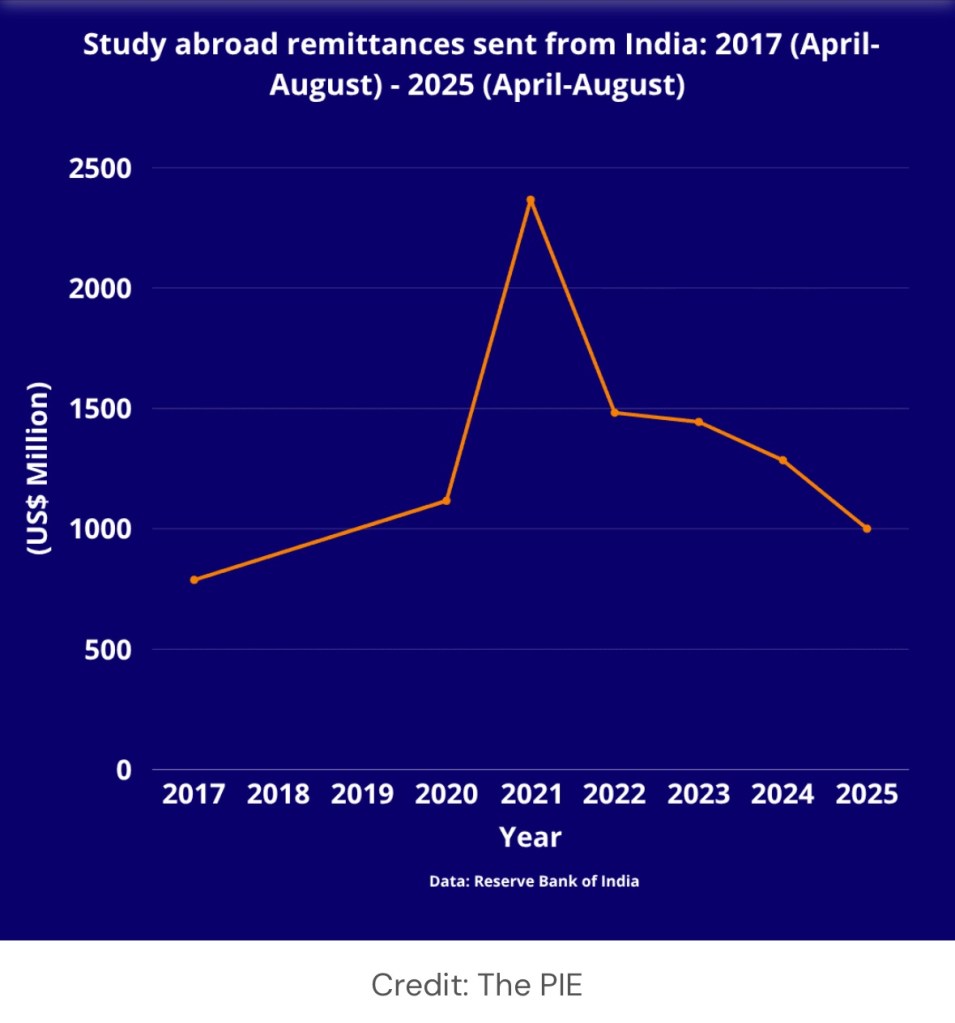
RBI Data Analytics (Source: The PIE) In May 2025, the UK government’s immigration white paper included an intention to explore introducing “a levy on higher education provider income from international students”, which would be reinvested into the higher education and skills system. The white paper said further details would be set out in the 2025 Autumn Budget.
Recent announcement from Australia
Interesting to see the emphasis on elevating Government priorities for partnerships with the regional countries through the International education offered by the native higher education institutions. Cost of living for the international students is increasing year by year. Government interventions in such areas will give financial comforts to the international students who migrate for knowledge aspirations with the self supporting financial resources.
Overseas Employment
Financial Express reported that Indian Students seeking international studies and careers are navigating a rapidly evolving educational landscape. Several countries have introduced new reforms impacting their immigration and student visa policies.
It is not an easy task for the Indian students to find an employment immediately after the completion of their academic courses. ICEF Monitor described this scenario as changes in the immigration policies and employment opportunities hosted by Big 4 countries. Just a couple of years ago, Indian students were flocking to a number of attractive study abroad destinations, and especially to the “Big Four” of Australia, Canada, the United Kingdom, and the United States. Collectively, those four host countries welcomed more than 70% of all Indian students abroad, offering a range of study opportunities, post-study work rights, and the possibility of immigration.
Indian establishments have to come forward in having systems like recruitment drive exclusively for the Indian students coming with the international academic exposure. This will be a win-win situation for everyone who has the aspiration for knowledge acquisition and delivery for enriching the native talent pool.
-
3 Dimensions of Knowledge Economy: Knowledge Capital, Innovation and Inclusive Growth
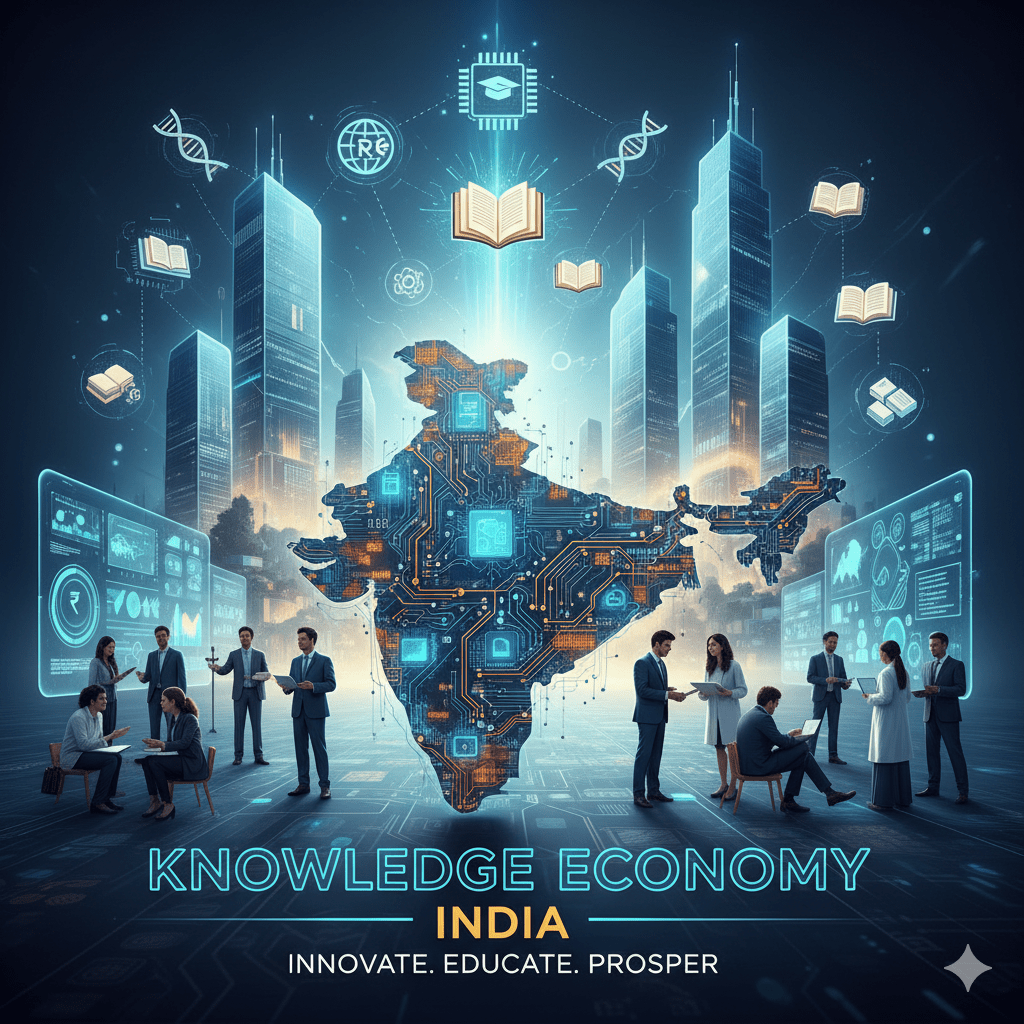
Gross Domestic Knowledge Products of Knowledge Economy GDP to GDKP, the transition getting millions and millions of young talents onboard the Knowledge Economic Development of India.
India’s Knowledge Economy
Knowledge economy develops a framework to yield the best return on knowledge investment for elevating its impacts on economic and social life in the country.
Ministry of Statistics and Programme Implementation describes that Knowledge plays a very critical role in economic development, measurement of domestic knowledge items would provide us with insights into the knowledge structure of an economy, which in turn would help define knowledge policy to steer national economic development to solve the varied socio-economic problems facing the nation. Moreover, India is currently evolving strategies to capitalize on its demographic dividend to make it a developed economy by 2047. Knowledge will play a critical catalytic role in this transition. Thus, quantification of the contribution of these knowledge items/products in the national GDP assumes vital significance.
The Gross Domestic Product of a nation measures the total output of goods and services, the impact of Knowledge creation and its dissemination in economic growth does not get effectively captured as GDP metric is not conceptualized to provide that information. GDP was intended to measure economic activity and thus facets of knowledge embedded in the activities are not given its due prominence (Source: https://www.mospi.gov.in/concept-note )
The World Bank Approach
The World Bank measures knowledge-related economic indicators through metrics like the Knowledge Index to supplement the GDP. GDKP is an alternative measure of a nation’s wealth, focused on knowledge creation rather than traditional goods and services. An economic indicator prepared by the World Bank Institute is to measure a country’s ability to generate, adopt, and diffuse knowledge.
India’s Talent Powerhouse
India’s share in the global talent pool is growing year by year. India’s strength of higher education students in STEM fields contribute in a great way to make the country becoming a hub for digital talent and R&D. However, India’s overall ranking in the Global Talent Competitiveness Index (GTCI) is lower than some developed nations. Migrated Indian S&T Diaspora talent pool take active role in the knowledge based economic programs of developed economies.
Minister of External Affairs Dr Jaishankar said that there is greater interest in the growth of Global Capability Centres (GCCs) in India that take the quality of economic activity to a much higher level (https://www.mea.gov.in/Speeches-Statements.htm?dtl/39466/EAMs_remarks_at_the_launch_of_Global_Access_to_Talent_from_India_New_Delhi_May_06_2025 )
Brain Circulation for Knowledge Transfer
There are currently roughly about 34 million Indians and PIOs living and working abroad. While Developed Economies engage Indian talents for enhancing knowledge based economic development through innovations for the advanced technologies and products, one third of diaspora population is located in the Gulf region housing domestic services, infrastructure development and fossil fuel economic growth, not commonly known for knowledge intensive economic development activities.
Global Diaspora cited as India’s enviable ingredient needs greater push for Brain Circulatory Knowledge Networks to get them connected with the home needs and place them back in the home talent pool through the reverse migration.
Domain specific Knowledge Management Networks connecting Global Indian Diaspora are yet to occupy a space in New World Order. Migration through knowledge path is subjected for severe turbulence in the present world. The reverse migration path needs to be a smooth one protecting the knowledge strengths of Indian diaspora.
Innovation & Entrepreneurship aspirations of the young talents at the school level Atal Tinkering Lab ecosystem will elevate the present innovation networth to attain a convincing knowledge health level in future curtailing the talent flow out of the country.
-
3 Dimensions of Sustainable Economic Growth: Past Knowledge, Free Exchange of Knowledge and Innovation

Borderless Brain Circulation and Free Exchange of Knowledge are the futuristic needs for sustaining economic growth in the geopolitical dominated world.
Economic Sciences Nobel Laureate Joel Mokyr strongly believes in the openness for knowledge transfer to sustain economic growth.
Joel Mokyr views openness and the free exchange of knowledge as crucial for sustained economic growth, arguing that a society must have a culture that values and allows new ideas to circulate, challenge existing structures, and build upon past knowledge. This includes fostering intellectual freedom, a free press, and tolerance, as these conditions are necessary for innovation to thrive and for societies to solve major challenges.
-
3 Dimensions of Indigenous Growth: Human Capital, Science & Technology Development and Economic Development in the world of Knowledge Economy Growth
India celebrates the birth anniversary of Dr APJ Abdul Kalam on 15th October. He envisioned India’s Indigenous Science & Technology growth for India’s Economic Development and Globalized Collaborative Framework.
——
According to Dr APJ, there is no Brain Drain in India. India’s celebrated scientist and former president interacted with school students during Asianet News Edufest 2012 in Kerala. A smart question put by the budding aspirant received the intellectual answer to keep the Wings of Fire flying high in the global stage. He emphasized the need for establishing a great scientific laboratory to invite the global talents for performing collaborative research with India.Millions of higher education students energize the knowledge powerhouse of India while a few thousands settle in the overseas for exchange of knowledge in the globalised world 🌍.
A research study on “Top Talent, Elite Colleges, and Migration: Evidence from the Indian Institutes of Technology” documented that the incidence of migration among top talent is sizeable. This study results suggest that elite schools play a key role in shaping migration outcomes, both in terms of the overall propensity and the particular migration destination.
Among the top 10 scorers in JEE, nine have migrated. Among the top 100 scorers, 62% have migrated, and 36% among the top 1000 (Source: Journal of Development Economics Vol.164, Sept 2023, 103120).
World Bank described the key objectives required to strengthen India’s human capital as a critical long-term investment to eliminate extreme poverty and foster India’s middle class: Enhancing investment in the early years of children’s development; Improving the quality of education in schools and colleges.
-
3 Dimensions of Operating System Lifecycle: Extended Security Updates, New Hardware and Right to Restore
July 2015 – Oct 2025, the 10 year lifecycle of Operating System in the world of sustainability to extend asset life and utility.

Microsoft announced that Windows 10 will reach the end of support on October 14, 2025. At this point technical assistance, feature updates and security updates will no longer be provided. If you have devices running Windows 10, Microsoft recommend upgrading them to Windows 11- a more modern, secure, and highly efficient computing experience. If devices do not meet the technical requirements to run on Windows 11, we recommend that you enroll in the Windows 10 Consumer Extended Security Updates (ESU) program or replace the device with one that supports Windows 11.
Europe forces Microsoft into free extended support for Windows 10 …Microsoft is providing free Extended Security Updates (ESU) for consumers in the European Economic Area (EEA) until October 13, 2026. This free support is a change from Microsoft’s original plan and is in response to consumer advocacy and the Digital Markets Act (DMA).
Microsoft claim that phasing out older operating systems and upgrading to newer versions is a natural part of the lifecycle—one that helps ensure you have the latest security features and innovations.
Global e-waste from laptops and computers is a massive and growing problem, with 62 million metric tons generated in 2022 and only a fraction (22.3%) formally recycled, according to the Global E-waste Monitor.
Picture: Google Gemini generated AI
-
அறம்-பொருள்-இன்பம், தட்ப வெட்ப மாற்றங்களின் முப்பரிமாணம்
அறம்-பொருள்-இன்பம், தட்ப வெட்ப மாற்றங்களின் முப்பரிமாணம். இழப்பீடு தொகை பின்தங்கிய நாடுகளுக்கு பொருளாதாரத்தில் முன்னேறிய நாடுகள் கொடுக்கும்பட்சத்தில் இழப்பீடுகள் நடைபெறுவதைத் தடுக்க நடவடிக்கைகள் எடுக்க வேண்டிய கட்டாய சூழ்நிலை.
Low income countries are vulnerable to spending more on climate induced damages.COP28 Delegates meeting in Dubai agreed on the operationalization of a fund that would help compensate vulnerable countries coping with loss and damage caused by climate change, a major breakthrough on the first day of this year’s UN climate conference (Source: UN News)
The initial funding is close to US$429m. €225m ($245m) will come from the EU, including US$100m from Germany. There is also £60m ($75m) from the UK, $24.5m from the US and $10m from Japan. The funding will be a much-needed boost for the agreement, as the loss and damage resolution does not mention scale or the replenishment cycle, which climate justice advocates say raises questions about the fund’s long-term sustainability.
The UAE is likely to see this as a major win for its presidency, as the two-week climate conference kicks off amid controversy over the country’s oil and gas expansion plans (Source: The Guardian)
-
Dial *121# to activate SDG 5G pack for 3D self service: Society-Environment-Economics
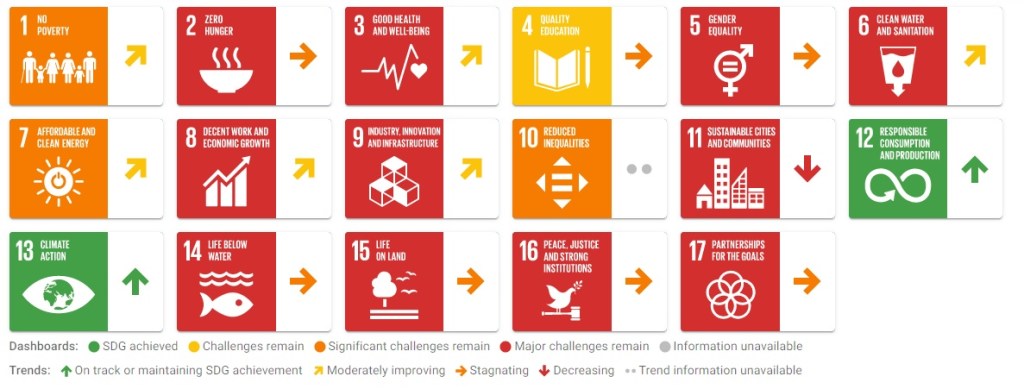
India (with Global SDG rank of 121 out of 163) is home to the multi-generational family businesses that deliver huge proposition of products and services to the growing Indian consumer base. These family businesses in addition to public enterprises and the growing number of startups contribute for the significant growth in GDP.
Acceleration to reach the high performing bandwidth is possible with the active participation of all stakeholders and young innovative minds in the collaborative mission.
√ Check own carbon emission.
√ Check own natural resources account balance.
√ Check own sustainable development package.
√ Deactivate carbon emission.
√ Activate sustainable development value added services.
√ Manage own carbon credit.
√ Transfer carbon credit balance to other users.
√ Manage product lifetime extension.
√ Right to repair. -
Tamil Literature and Ancient Practices, the Source of Global Goals

முப்பரிமாணம் -
Hello World!
Welcome to WordPress! This is your first post. Edit or delete it to take the first step in your blogging journey.
- Subscribe Subscribed
-
-
 முப்பரிமாணம் (Mupparimanam) - 3D development for connecting the ancient, conventional and modern thinking with Global challenges and UN SDGs Sustainable Development Goals
- Subscribe Subscribed
- Sign up
- Log in
- Copy shortlink
- Report this content
- View post in Reader
- Manage subscriptions
- Collapse this bar
-
