-
Lifelong Learning, the Swedish model to enrich the three dimensions (Physical, Mental and Social) essential for Senior Citizens in India
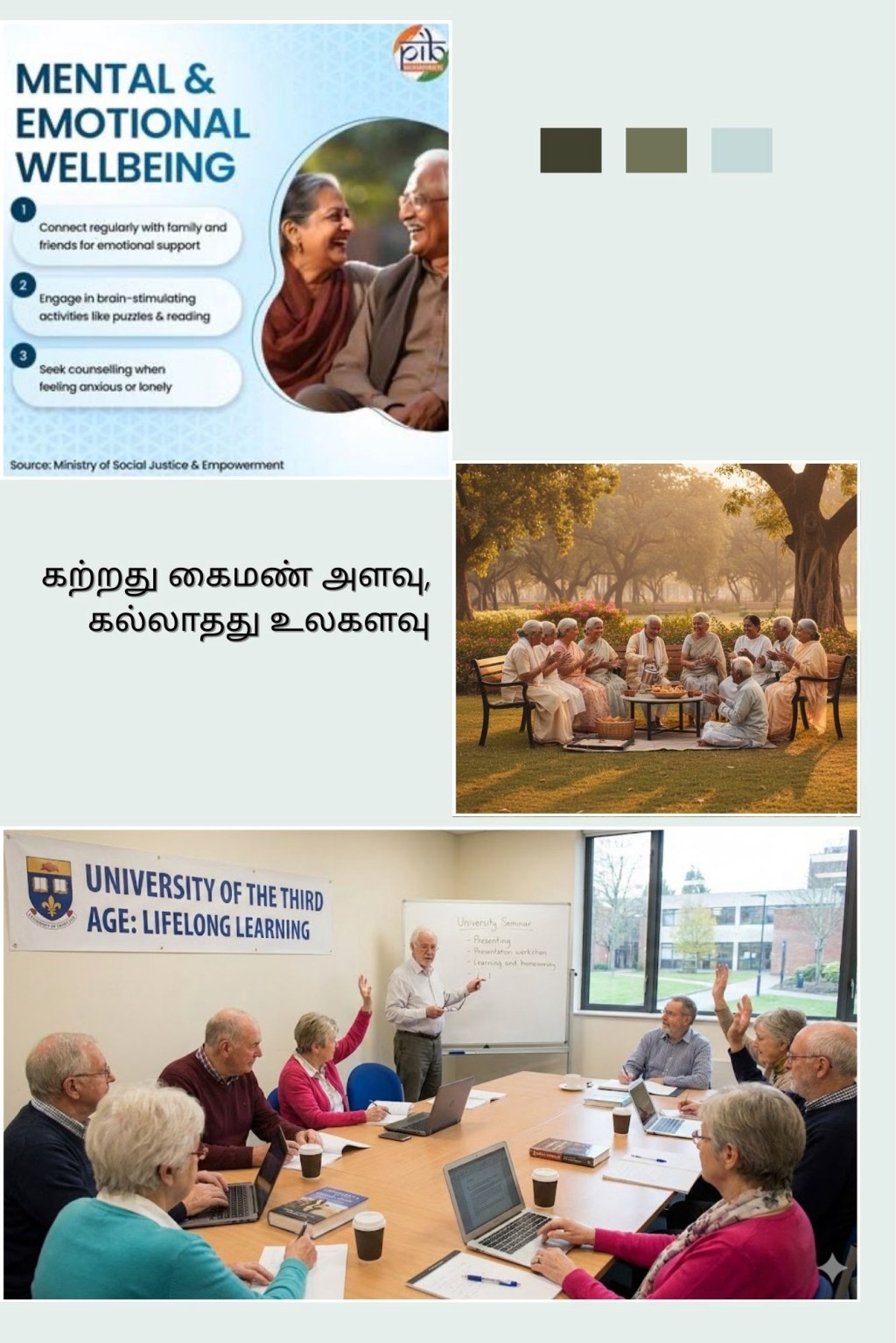
கற்றது கைமண் அளவு, கல்லாதது உலகளவு.
Ministry of Statistics and Program Implementation analysis showed that India’s population, which reached 1211 million in 2011 and projected to reach 1363 million in 2021 makes India one of the youngest countries in the world. India has a relatively young population with a median age of 28.4 years. Approximately 26% of the population is below 14 years and ~67% is between the age of 15 to 64 years and 7% above the age of 65.
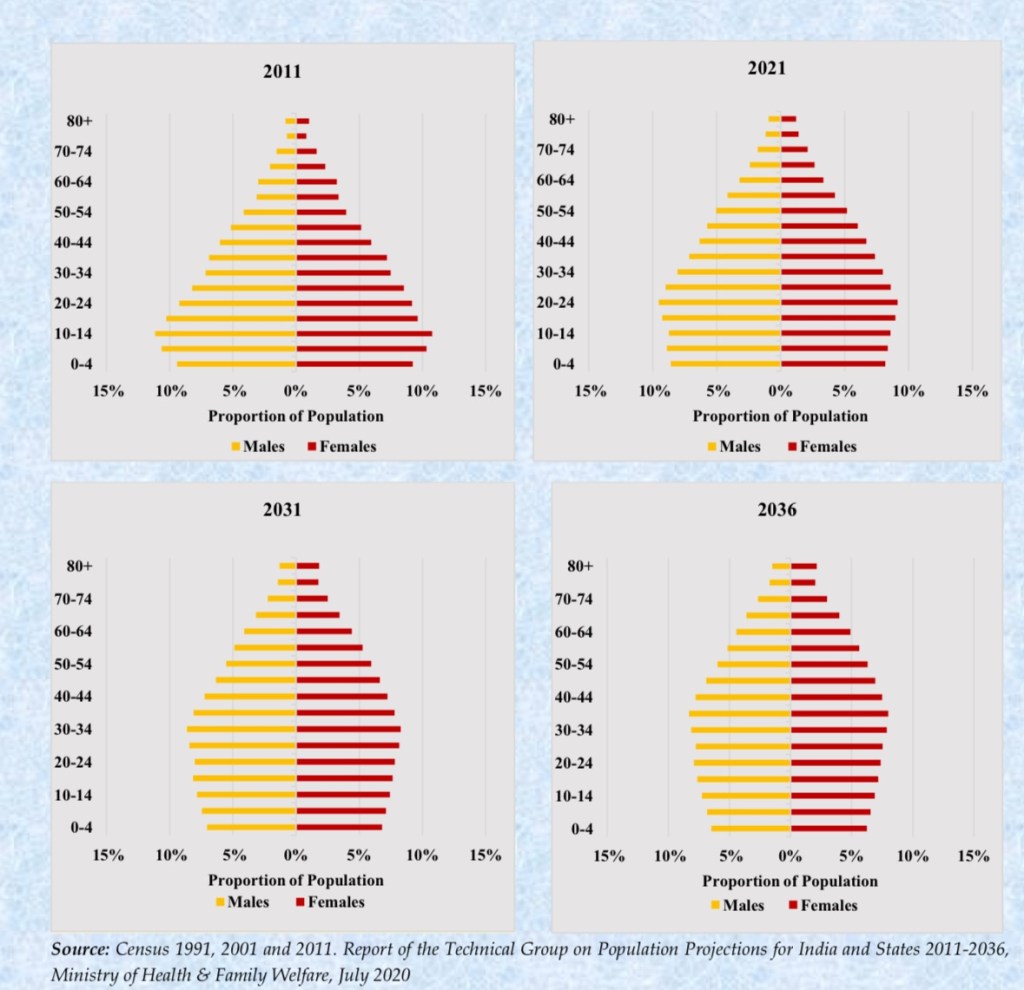
India’s Aging Population
United Nations Population Fund’s 2023 India Ageing Report projected that the population of people aged 80+ years will grow at a rate of around 279% between 2022 and 2050
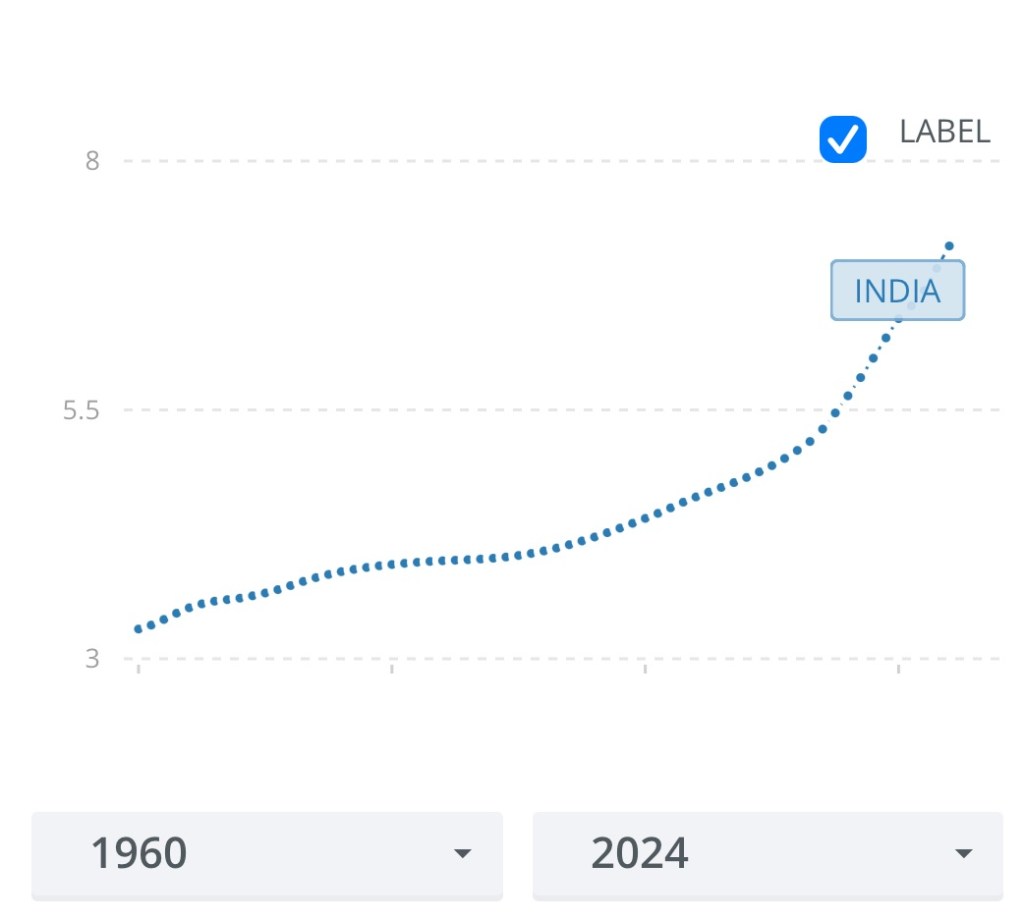
Population ages 65 and above (% of total population) – India
World Population Prospects, United Nations ( UN ), publisher: UN Population DivisionOver 40% poorest
More than 40% of the elderly in India are in the poorest wealth quintile, with about 18.7% of them living without an income, the report said, adding that such levels of poverty may affect their quality of life and healthcare utilisation.
According to Press Information Bureau, India is undergoing a rapid demographic transition, with the elderly population (60 years and above) projected to more than double from100 million in 2011 to 230 million by 2036. This evolution indicates that by 2036, nearly one in seven Indians will be aged 60 years or older.
Government Initiatives for Elderly in India
The Government of India has undertaken numerous initiatives, policies, and action plans to tackle the challenges encountered by the elderly population.
While India focuses on silver economy valued at approximately seventy-three thousand crore rupees in 2024, with projections indicating substantial multi-fold growth in the years ahead, the lifelong education programs are equally important for enhancing the mental and social wealth of senior citizens in India. Research identifies senior citizens, along with professionals in the 45 to 64 age bracket, as the ‘wealthiest age cohort’ globally.
Press Information Bureau press release in February 2022 stated that Government approved a new scheme New India Literacy Programme for the period FYs 2022-2027 to cover all the aspects of Adult Education to align with National Education Policy 2020 and Budget Announcements 2021-22. The National Education Policy 2020 has recommendations for Adult Education and Lifelong Learning.
The scheme will be implemented through volunteerism through online mode. The training, orientation, workshops of volunteers, may be organized through face-to-face mode.
Higher Education for Senior Citizens
The Guardian reported that record numbers of Swedish retirees are enrolling in a university run “by pensioners for pensioners” amid increased loneliness and a growing appetite for learning and in-person interactions.
Senioruniversitet, a national university that collaborates with Sweden’s adult education institution Folkuniversitetet, has about 30 independent branches around the country which run study circles, lecture series and university courses in subjects including languages, politics, medicine and architecture.
Swedish experience cited that Senior citizens don’t live in a vacuum. If nothing else, it has an effect on children and grandchildren. Not just sitting rocking in a rocking chair, but senior are out and want to learn more. Then they can share that with Gen Z.
According to a retired history professor in Sweden, older people were “more and more alert” and that there is a fantastic hunger for education. It’s totally fascinating that there are so many who want to learn more and learn more about the world. It is so very needed in our time.
This education model is essential for countries like India with the rise in the population of senior citizens. Indian Public and Private Universities have to float senior citizens friendly education system for binding the aged knowledge force with the government policies and developmental programs.
India’s NAAC Grading does not have a separate, specific grading system solely for standalone adult education programs that are not part of a formal Higher Education Institution.
Adult education programs might be covered by NAAC if they are offered as part of the “Extension” activities of an existing, accredited university or college. In such cases, they contribute to the overall institutional assessment under the “Research, Innovations and Extension” criterion (Criterion 3), but are not graded independently with their own specific grading scale.
Engagement of Retirees
Engagement of retired community is crucial for the Indian society. It involves staying active mentally, physically, and socially through social activities, spiritual programs, hobbies, volunteering, and continued learning. This is much needed to improve overall well-being, with options such as transferring knowledge, mentoring Gen-Z, performing creative arts & music, and joining associations/clubs/nonprofit organizations to deliver the social rich values.
Conclusion
India needs a robust policy and active programs accommodating the learning and mentoring interests of senior citizens for enhancing their physical, mental and social status.
-
Three Dimensions of Wealth Inequality influenced Economic Development in the context of Sustainability: Economic, Social and Environmental Growth patterns.

The world is extremely unequal
World Inequality Report 2026 released in December 2025 reveals extreme global inequality, with the richest 10% taking 53% of income, the bottom 50% getting just 8%, and wealth even more concentrated (top 10% hold 75%).
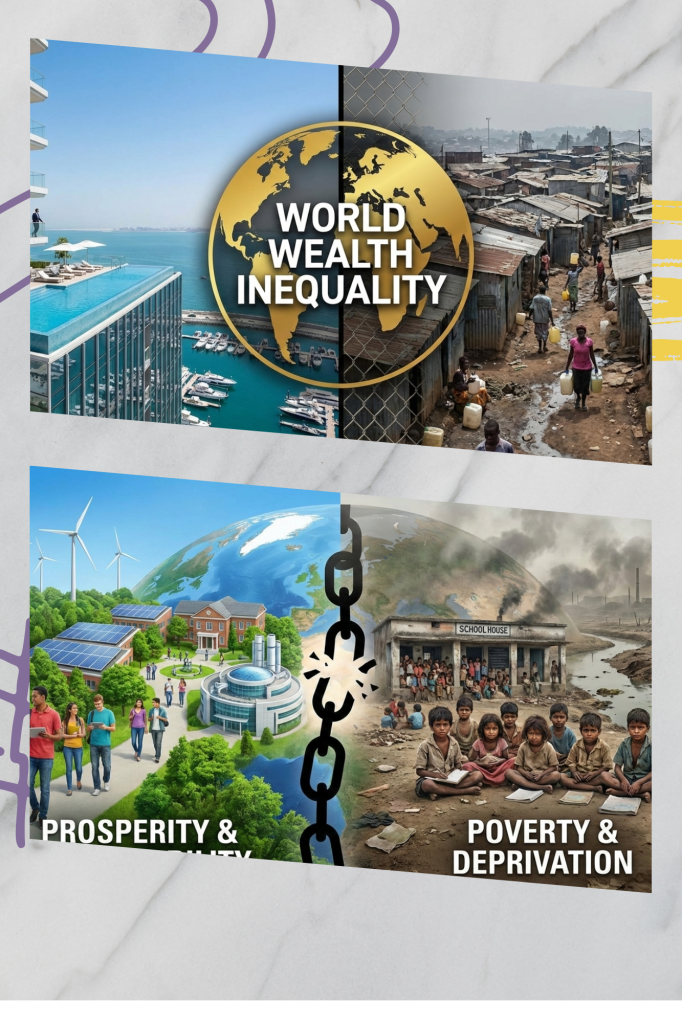
The World Inequality Report 2026 (WIR 2026) marks the third edition in this flagship series, following the 2018 and 2022 editions. These reports draw from the work of over 200 scholars from all over the world, affiliated with the World Inequality Lab and contributing to the largest database on the historical evolution of global inequality.
World Inequality is severely impacting the global economic, social and environmental growth.
The first and most striking fact emerging from the data is that inequality remains at very high levels.
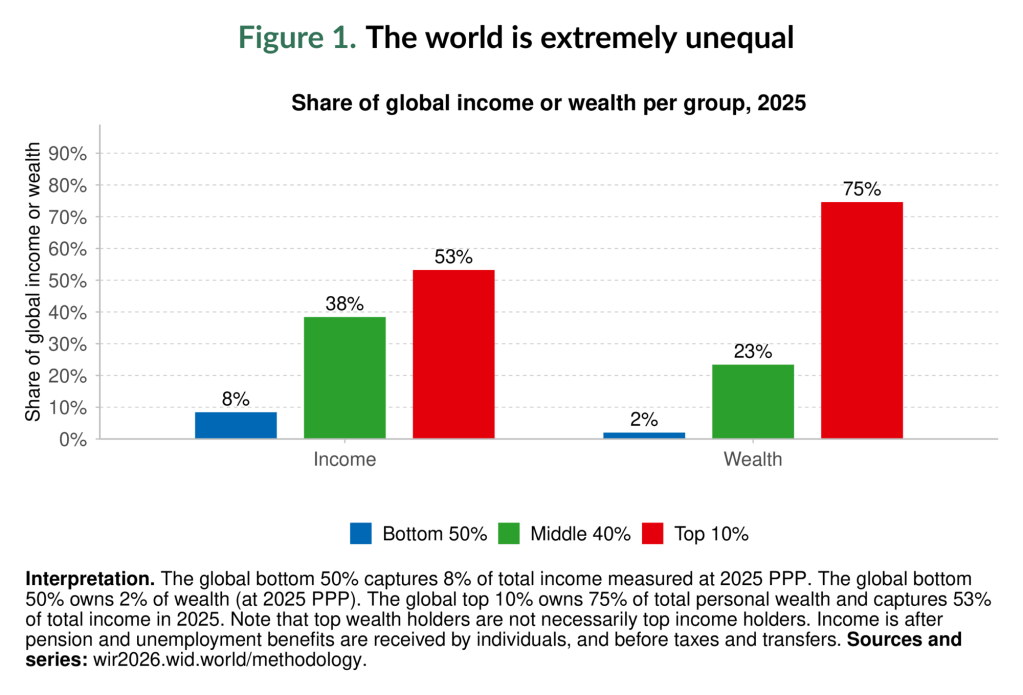
Figure 1 illustrates that, today, the top 10% of the global population’s income-earners earn more than the remaining 90%, while the poorest half of the global population captures less than 10% of the total global income. Wealth is even more concentrated: the top 10% own three-quarters of global wealth, while the bottom half holds only 2%.
Key findings highlight that the ultra-rich’s wealth grows much faster than the poor’s, women’s share of labor income barely budges, and climate change exacerbates these divides, requiring urgent policy shifts like banning fossil fuel investments and taxing carbon assets to tackle this crisis.
The global wealthiest 10% of individuals account for 77% of global emissions associated with private capital ownership, underscoring how the climate crisis is inseparable from the concentration of wealth
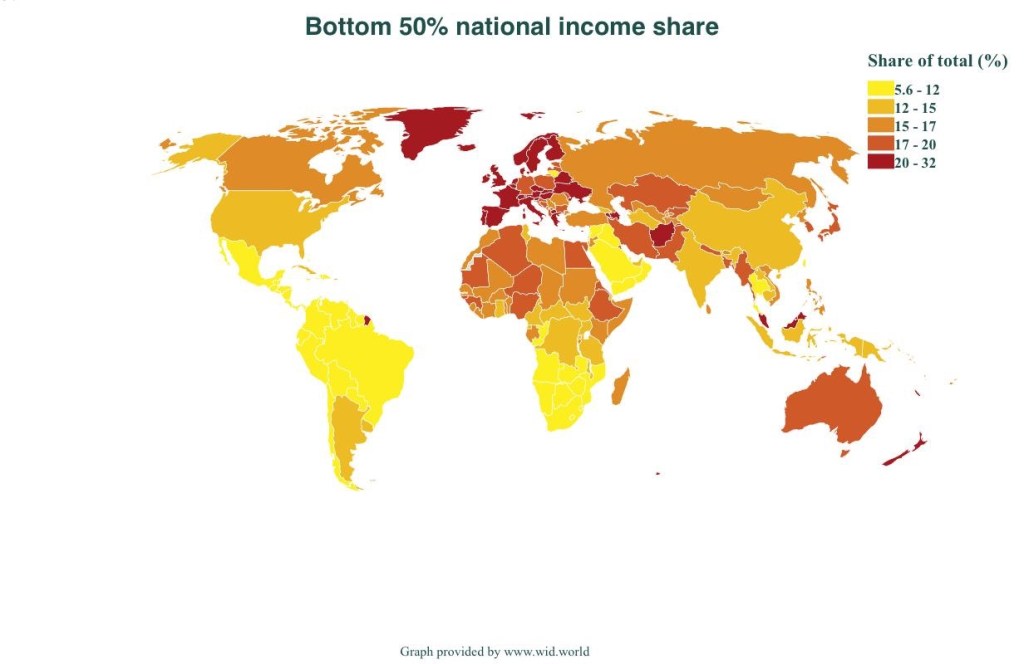
Europe and much of North America & Oceania are among the least unequal, though even here, the top groups capture far more wealth than the bottom half. The United States stands out as an exception, with higher levels of inequality than its high-income peers. At the other end of the spectrum, Latin America, southern Africa, and the Middle East & North Africa combine low incomes for the bottom 50% with extreme concentration at the top, which yields some of the highest T10/B50 income gaps worldwide.

India’s Wealth Inequality
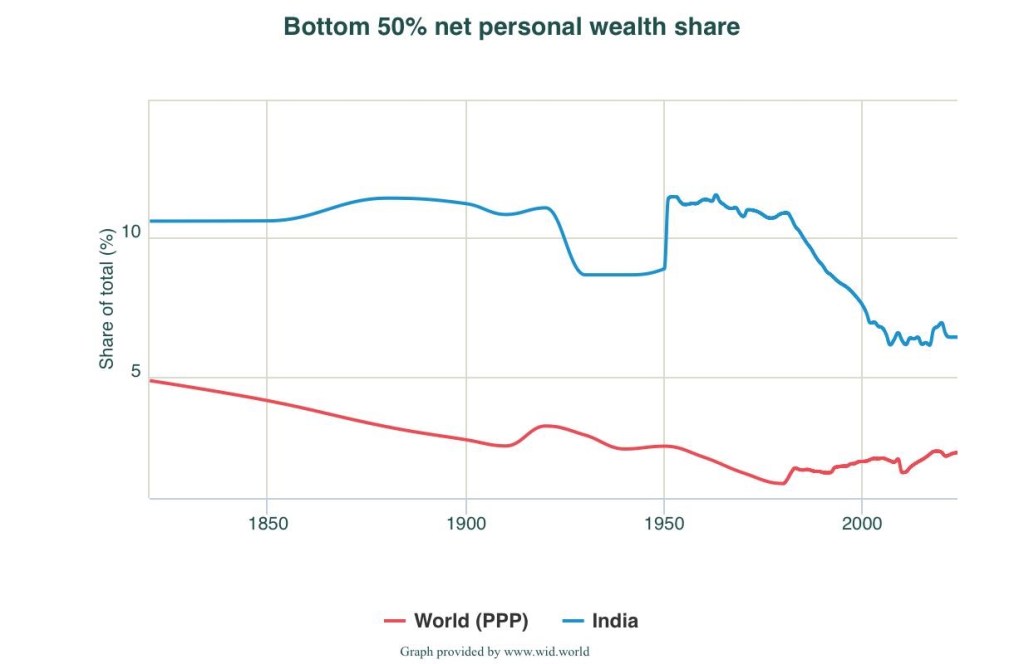
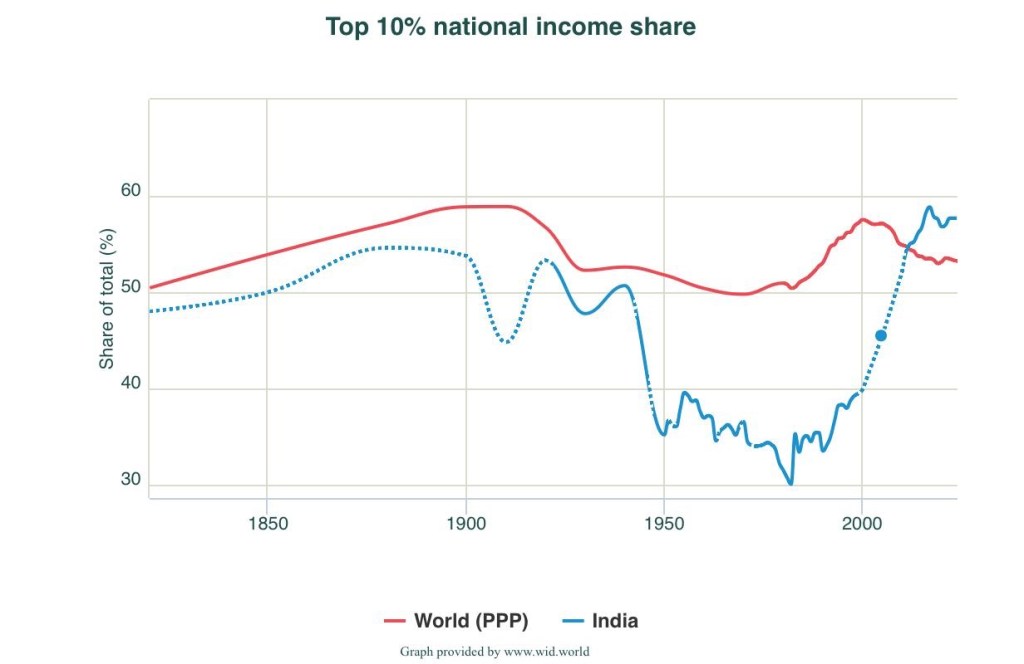
India is severely impacted in terms of economic, social and environmental growth due to the great divide in income and wealth accumulation patterns. Several studies in the global stage depicted the impacts of wealth inequality on the most important national needs such as economic development, socioeconomic growth and access to education.

According to Industry Insights on “Income Inequality and the Earnings Gap Between Educated and Non-Educated Workers”, Several economists claim that income inequality hurts economic growth, economic and financial stability, and productivity and economic efficiency (Fletcher, 2014; Sherman, 2014). Joseph Stiglitz, a Nobel Prize winning economist, states, “We are paying a high price for the inequality that is increasingly scarring our economy — lower productivity, lower efficiency, lower growth”.
Wealth Inequality and Education
Wealth inequality severely impacts education by creating unequal access to early learning, resources, and quality schools, leading to vast achievement gaps, lower college enrollment/completion for the poor, increased stress, and reduced social mobility, effectively trapping disadvantaged students and perpetuating cycles of poverty.
How Does Wealth Inequality Shape Children’s Education?
Wealth inequality affects children even before they step into a classroom. Low-income families often lack access to quality early childhood education, nutritious food, and stable housing, the essentials that support brain development and learning readiness. Wealthier children are more likely to start school with stronger vocabularies, better focus, and more support at home.
Corruption and extreme wealth
Extreme wealth, that of at least one billion dollars owned by a person or family, is a growing phenomenon in the world with potential effects on social, political and economic dimensions. Simultaneously, corruption -misuse of delegated power for private gain- occurs in all countries of the world. Although it is recognized that the origin of extreme wealth it is associated with own efforts and legal mechanisms (company founders, top executives, investments, etc.), there seems to be a relationship between extreme wealth and corruption.
Harvard University article on “A Comparative Study of Inequality and Corruption” argues that income inequality increases the level of corruption through material and normative mechanisms. The wealthy have both greater motivation and more opportunity to engage in corruption, whereas the poor are more vulnerable to extortion and less able to monitor and hold the rich and powerful accountable as inequality increases. Inequality also adversely affects social norms about corruption and people’s beliefs about the legitimacy of rules and institutions, thereby making it easier for them to tolerate corruption as acceptable behavior.
Connection between Water and Shared Prosperity
Wealth inequality severely restricts water access, forcing the poor to pay disproportionately high prices for unsafe water, leading to poor health, disease, and deeper poverty, while the wealthy often bypass centralized systems for private, high-quality sources, exacerbating the gap and limiting resources for universal access. This creates a cycle where poverty causes worse water access, which in turn deepens poverty, affecting everything from health to education.
Population in wealthier nations where clean water flows freely at the turn of a tap spend less than 0.1% of their income on water, so little that it doesn’t even register as an expense for most people.
Conclusion
Top 10% in India must have a fire in the belly for bringing India’s equitable wealth and economic growth to strengthen India’s education, socioeconomic development and natural resources wealth.
-
Three dimensions of Science Education for Indian School Students in the overseas: Diversity, Equity and Inclusivity

STEM Education
STEM education is a value added learning component for the worldwide school students. Access to STEM intensive learning resources is not equally distributed in the global stage. Developed economies compete in developing the STEM learning at the school level to get the budding talents onboard the integrated scientific research and innovation ecosystem. The growth of STEM education in the country level science ecosystem is purely dependant on the opportunities available to the school students.

Google Gemini generated AI Imaging Ranking through CEE Index
Center for Excellence in Education (CEE) releases Index of Excellence in STEM Education. This index analyzes individual student rankings in each of five STEM-related Olympiad competitions, generates averages and rankings by participating country, and compares overall Olympiad performance by country.
The average rankings of students in each country are calculated and ranked for each Olympiad, with the average of those rankings determining the final country rank on the CEE Index based on the combined outcomes of International Olympiads in Biology, Chemistry, Physics, Math, and Informatics.
India stands at 8th position in CEE 2025 Index of Excellence in STEM Education. The People’s Republic of China has ranked either first or second in the CEE Index every year since 1988. The USA claimed a second-place overall ranking in the CEE Index, with first place showing in Physics, second place in Mathematics, third place in Biology and Chemistry and a 12th in Informatics.

Indian Schools
According to recent UDISE+ data, India is housing approximately 14.72 lakh schools for 2024-2025 academic year with the majority being located in rural areas.
Access to science education resources is not equal for 14.72 lakh schools. This situation equally applies for the Indian school students in the overseas, especially from the geographies not known for science and technology development. Indian Diaspora students living in the developed economies with the intense focus on S&T development have the great opportunities in learning the STEM education and laying a strong foundation for enhancing their science learning while they progress to the world class higher education.
Indian Schools in the Gulf Countries
Ministry of External Affairs, Government of India reported that there are a large number of Indian schools operating in Gulf countries which cater to the needs of Indian expatriate population based in the region.
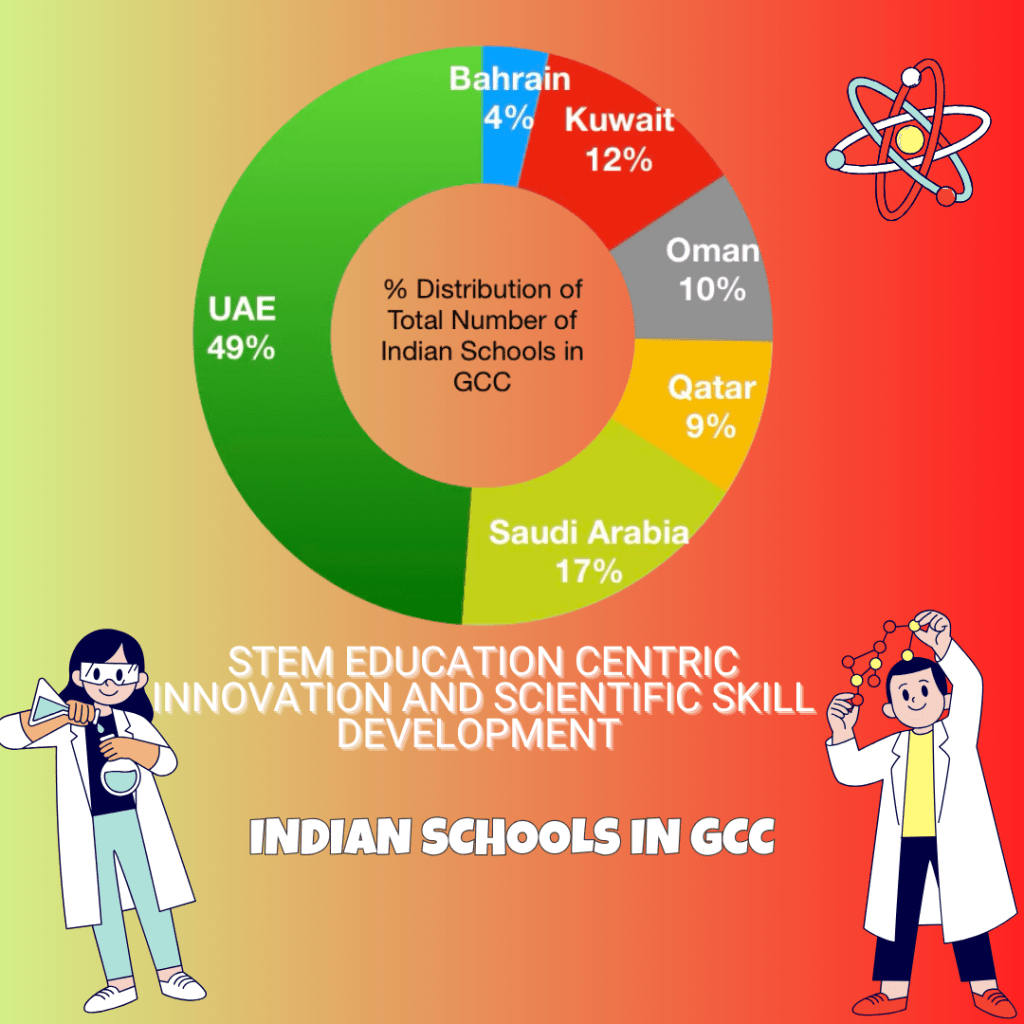
Source: RAJYA SABHA UNSTARRED QUESTION NO-1663 ANSWERED ON- 03/08/2023
INDIAN SCHOOLS IN GULF COUNTRIESAccording to the Indian Embassy, there are 26 Indian schools in Kuwait which are affiliated to Central Board of Secondary Education (CBSE) Delhi. These schools are providing CBSE patterned education to more than 60,000 students. Indian Embassy in Dubai stated that Northern Emirates of the UAE have 81 schools following Indian Curriculum. 76 schools follow CBSE Curriculum, 4 schools follow ICSE and 6 schools follow Kerala State Board curriculum. Three out of the six schools offering Kerala Board Curriculum also offer CBSE Curriculum.
India Goes Global with Atal Tinkering Labs, an initiative of Atal Innovation Mission (AIM)
Atal Innovation Mission has recently launched several initiatives in the Gulf countries. Salient features of this program are:
- Taking forward Hon’ble PM Shri Narendra Modi’s vision of Viksit Bharat @2047, ATLs are scripting a global story of innovation & collaboration. 🇮🇳🌍
- In a historic first, Hon’ble Education Minister Shri Dharmendra Pradhan launched Atal Tinkering Labs in 12 schools across all 7 Emirates of UAE 🇮🇳🤝🇦🇪
- These ATLs will nurture curiosity, creativity & problem-solving through hands-on learning, turning students into future-ready innovators.
- What began as a vision to ignite innovation in India’s classrooms is now inspiring young minds worldwide — empowering the youth of India & UAE to become next-gen entrepreneurs & changemakers! 🚀💡
Interesting expansion to get the Indian students onboard ATLs and make them collaborating with native side. Much needed for CBSE Schools in the Middle East. Access to innovation ecosystem is very limited for Indian students taking CBSE curriculum in GCC region.
Indian school students have to depend on the school resources for enhancing their scientific knowledge. At the present time the opportunities are very limited for these aspirants outside the school level programs. There is a great need for the Professional and Cultural Associations housing Indian Community to come forward in bringing the adequate resources to the students through various channels.
Science India Forum
United Arab Emirates introduces India’s rich scientific heritage to the youth in order to kindle scientific temperament within them. SIF UAE like its parent organization VIBHA (Vijnana Bharati), believes in promoting and popularizing Indian sciences for the service of society. Active in UAE for the past 16 (since 2006) years.Shaastrotsav (Festival of Science) is a prominent science and technology event held in Kuwait, organized by the Kuwait Chapter of the NSS College of Engineering Alumni Association (NSSCEAA Kuwait). The event, which began in 2009, is highly popular among students and professionals in Kuwait and features various competitions and exhibitions.
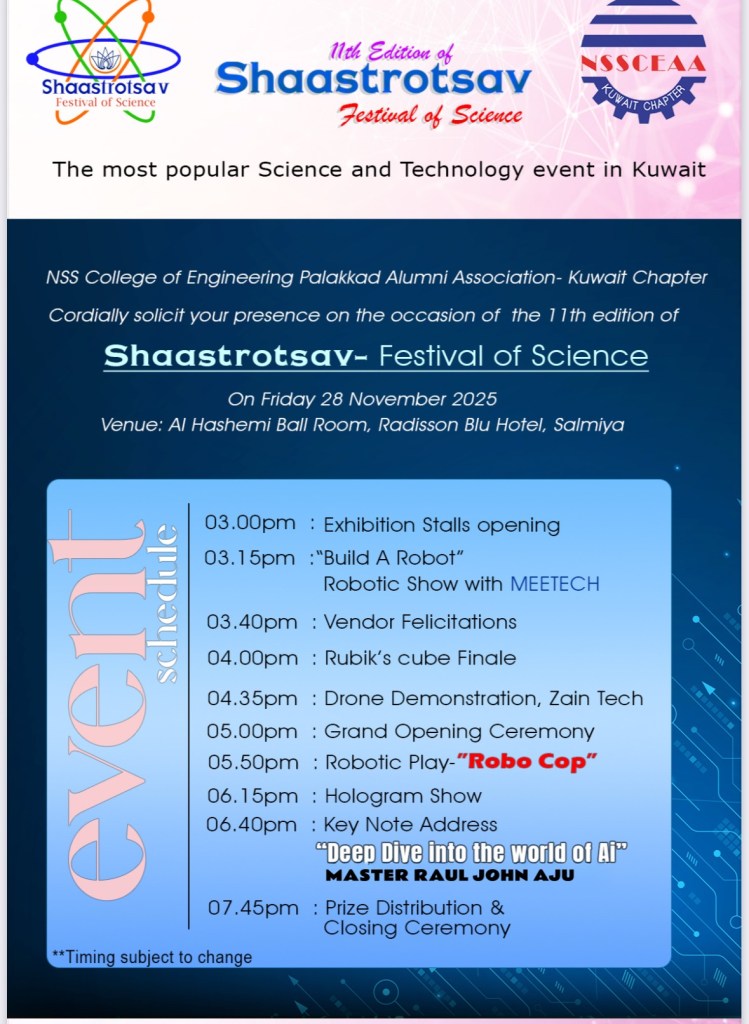
Indian Embassies in GCC region have to open doors for collaboration of India based scientific organizations with the Indian students in the Middle East.
-
3 dimensions of School Curriculum: Intended, Implemented and Achieved
A whopping figure of £180,000 (INR 2 crore) per annum for Private Tuition was floated by a family based in North London in search of an exceptional and experienced Tutor to guide their youngest child on his first steps toward becoming an English gentleman.
Attraction towards the private tuition is a global phenomenon. India is no exception.
LSE blogpost discusses the educational inequality: What does a £180,000 job ad for a private tutor for a baby reveal about the global education arms race? It’s tempting to put it down to the eccentric indulgence of a tiny global elite. But it in fact points to an explosion in private tutoring.
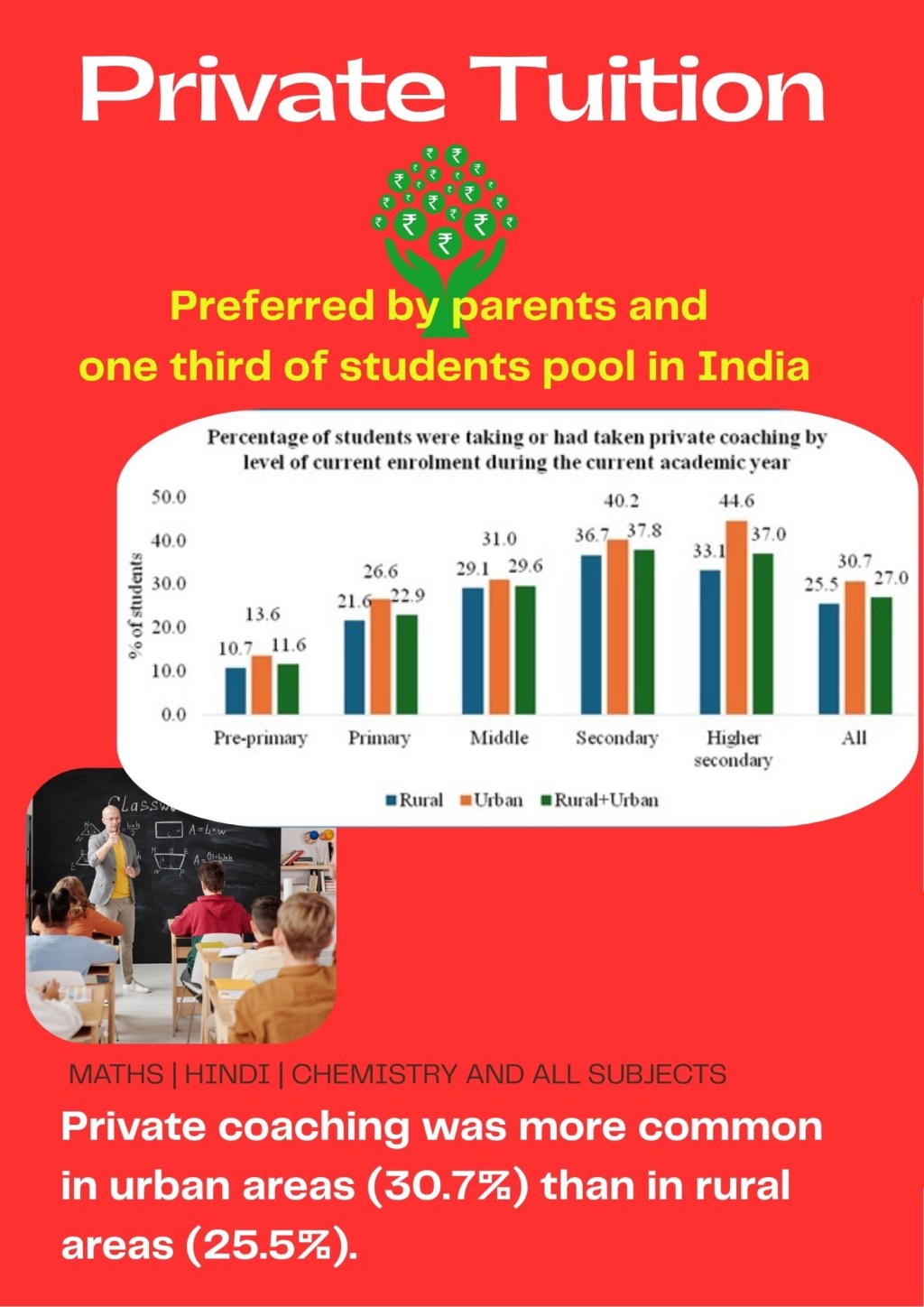
Recently released “Results of Comprehensive Modular Survey: Education, 2025 (April – June, 2025) in India” stated that nearly a third of all students (27.0%) were taking or had taken private coaching during the current academic year. This trend was more common in urban areas (30.7%) than in rural areas (25.5%).

This is a growing concern in India that houses huge population of school students. There is a great divide in accessing the foundational education resources. Households are forced to spend additional finance for the private tuition. Parents have to allocate special budget for preparing their children to appear for higher education entrance tests.
Intention of having private coaching increases as the students progress to secondary and higher secondary education.
A recent National Sample Survey Organisation report shows that thanks to the low quality of education, more and more students are relying on expensive private coaching and tuition. The report estimates that about 11% to 12% of a family’s expenditure goes for coaching classes and tuitions.
A working paper on Pricing Private Education in Urban India: Demand, Use and Impact”, February 2019 discussed the influence of private coaching in the life of school students in India.
It stated that private tutoring is widespread in India. One in five students in the 6th through 8th grade receive private tutoring, along with nearly one in three secondary school students. Students from various socioeconomic backgrounds attend private tuition centers, which provide tutoring on specific subjects, with more urban students (28 percent) receiving services than rural students (17 percent).
Households were less willing to pay for girls to attend private tutoring than boys, by an average of 10 rupees (around US$0.16). When children were already enrolled in private schools, households were less willing to pay for private tutoring by INR 50 (US$0.82), which reveals a trade-off between private schools and private tuition centers. Households’ income levels did not impact their willingness to pay.
According to Comprehensive Modular Survey: Education (2025), Course fees emerges as the largest education expense made by households for education of children
Across all types of schools, the highest average expenditure per student during the current academic year was on course fees (₹7,111), followed by textbooks and stationery (₹2,002) at the all-India level. The urban households paying significantly more across all categories. Notably, the average expenditure on course fees in urban areas was estimated at ₹15,143, whereas it was estimates at ₹3,979 in rural areas. This trend of higher expenditure in urban areas also evident for other types of education related expenses like transportation, uniforms, and textbooks.
Students in the rural schools have to depend on the academic resources provided by the school management. UDISE data: No. of Schools 14.71 Lakh with Urban count of
2.61 Lakh and Rural has 12.10 Lakh.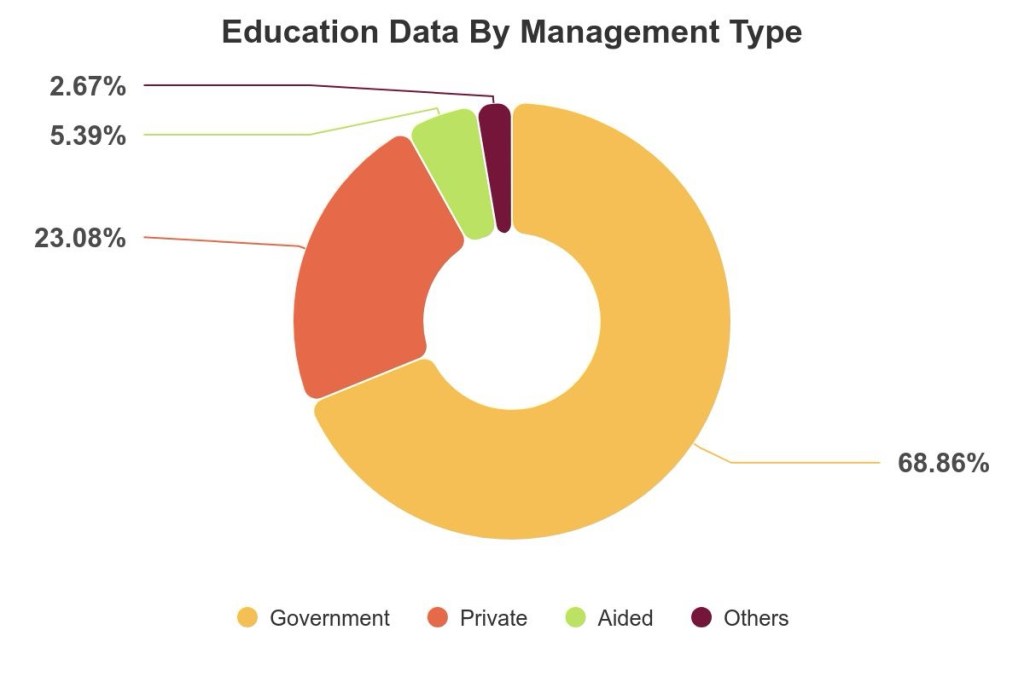
Rural households are forced to allocate additional budget for getting the extra coaching through private tuitions. Access to educational resources is very limited for the rural students. Private schools have their own pattern of delivering the academic curriculum at a cost higher than the government-aided and government schools. Government-aided schools depend on philanthropic support from the local community.
SDG 4 Quality Education scorecard for India is not an encouraging one at this time. Several reforms are required to bring Education Equity. 2025 ranking showed that Challenges remain and India is moderately improving with insufficient resources to attain goal.
In the absence of adequate teaching available within the school education framework, the students are forced to look for the channels that deliver “Extra value” coaching.
-
3 Dimensions of Distancing: Spatial, Social and Hypothetical
Physical Distancing was the talk of the town during Covid19 time. It was more complex than solving mathematical problem: Distance Formula in 3-space: the distance between points P(x1,y1,z1) and Q(x2,y2,z2) is given by dist(P,Q) = √(x1−x2)2+(y1−y2)2+(z1−z2)2.
Several creative phrases were floated to find accelerated solutions for the pandemic situations during COVID.
- Greetings from a distance.
- Have a great day, from 6 feet away.
- Distance makes us stronger.
- My six feet of space is my happy place.
- Keeping my distance, for your sake and mine.
- Physical distancing saves lives.
- Stand together by not standing together.
- Protect our future, from a safe distance.
- Keeping a safe distance for a safe workplace.
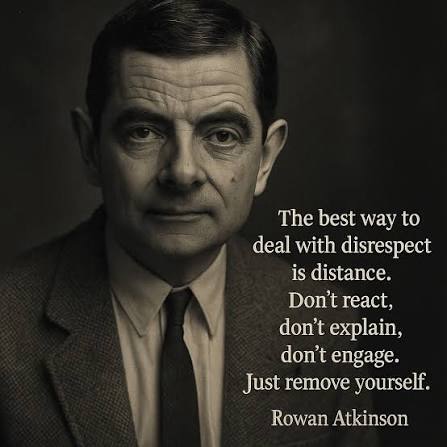
The best quote known for its uniqueness came from the world famous comedian who didn’t utter a single word to get the audience closer to his powerful expressions.
Rowan Atkinson (Mr.Bean) once said:
“Distance is the only answer to disrespect. Don’t react. Don’t argue. Don’t get involved in drama. Simply remove your presence.”
Interestingly World Health Organization used Mr Bean’s message for physical distancing. The character has been featured in animations promoting social distancing and kindness during the COVID-19 pandemic.
Mr Bean and Physical Distancing Action items are more or less similar irrespective of the type of distancing whether it is Physical Distancing or Psychological Distancing.
A research article published in Encyclopedia of Quality of Life and Well-Being Research describes three dimensions of psychological distance: spatial, social, and hypothetical.
Three Dimensions of Psychological Distance
- The spatial distance is that from the individual to the target of his judgment.
- The social distance is between the person and the rest of the world.
- The hypothetical distance is between certain and hypothetical events
Psychological distancing is a technique to gain perspective and regulate emotions by mentally stepping back from a situation or oneself.
Literature survey cites the benefits of psychological distancing
- Emotional regulation: Reduces the intensity of negative emotions like anger, hurt, and anxiety.
- Improved problem-solving: Enables clearer thinking by removing the emotional “noise” from a situation.
- Enhanced resilience: Helps individuals cope with stress and negative experiences more effectively.
- Better performance: Can improve performance in stressful situations, such as public speaking or taking a test.
Concluding Remarks:
All distancing intentions can’t be weighed equally. It depends on the purpose for good or bad isolation. Distancing outputs depend on how effective the intentions are brought for yielding the ethical and socially acceptable solutions.
-
3 Dimensions of Social Networking Influencers-driven Marketing: Consumer Benefits, Influencers’ Competency and Regulatory Compliance

Influencer-driven marketing is growing in the present day social networking channels where brands collaborate with individuals who have a significant social media following to promote products or services.
Celebrities, Famous Sports Stars and Other influencers take active role in marketing the specific brand or service. Consumers are easily attracted towards the marketing ads portraying such influencers. In the absence of regulatory compliance for influencers-driven marketing, the risk is with the consumers to see the proper end benefits for the money they spend for such products and services.
China tightens the screws: Influencers now need degrees to speak on finance, health, law (Source:
Media reports state that Chinese regulators have introduced new rules that directly affect influencers covering sensitive professional topics. Medical advice, financial guidance, legal opinions, or education commentary now fall under a tighter content regulation framework. Influencers must provide verifiable qualifications to speak on these subjects.
The regulations observed an increase in influencers giving investment recommendations, discussing treatments without medical training, or rendering legal interpretations with no legal training whatsoever. The new policy, updated in late 2025, requires these categories to provide proof of professional qualifications. Should the platforms fail to enforce the same, they would face penalties.
India is no exception for the influencers-driven marketing. Social networks are flooded with the recommendations coming from these influencers. Indian consumers have witnessed the influence of cinema celebrities in the vintage ads and campaigns before the advent of social networks. This influencing is greatly accelerated through the growing number of mobile phone users.
Many Bollywood actors and actresses have appeared in vintage advertisements.
Mint reported that Indian advertising has evolved over the course of the last 70 years, reflecting the change that the country’s economy as well as society has undergone.
India has introduced guidelines in 2023. The Department of Consumer Affairs, under the Ministry of Consumer Affairs, Food and Public Distribution, has released a set of guidelines called “Endorsements Know-hows!” for celebrities, influencers, and virtual influencers on social media platforms. The guidelines aims to ensure that individuals do not mislead their audiences when endorsing products or services and that they are in compliance with the Consumer Protection Act and any associated rules or guidelines.
The guidelines state that endorsements must be made in simple, clear language, and terms such as “advertisement,” “sponsored,” “collaboration” or “paid promotion” can be used. Individuals must not endorse any product or service that they have not personally used or experienced or in which due diligence has not been done by them.
The guidelines advise celebrities and influencers to always review and satisfy themselves that the advertiser is in a position to substantiate the claims made in the advertisement. It is also recommended that the product and service must have been actually used or experienced by the endorser.
-
Brain Circulation for Collaborative Science and Technology Development Framework involving Globally recognized Academicians and Researchers of Indian Origin
Access to International Education is a challenging one for the first-generation college students rooted from low-income group. in spite of such challenges the students who aspire to grow their scientific and technological strengths get privilege of mentoring by the global academicians of Indian origin.
We can imagine the quantum of growth when the global academics and scientific researchers of Indian origin collaborate with the students from the native country.
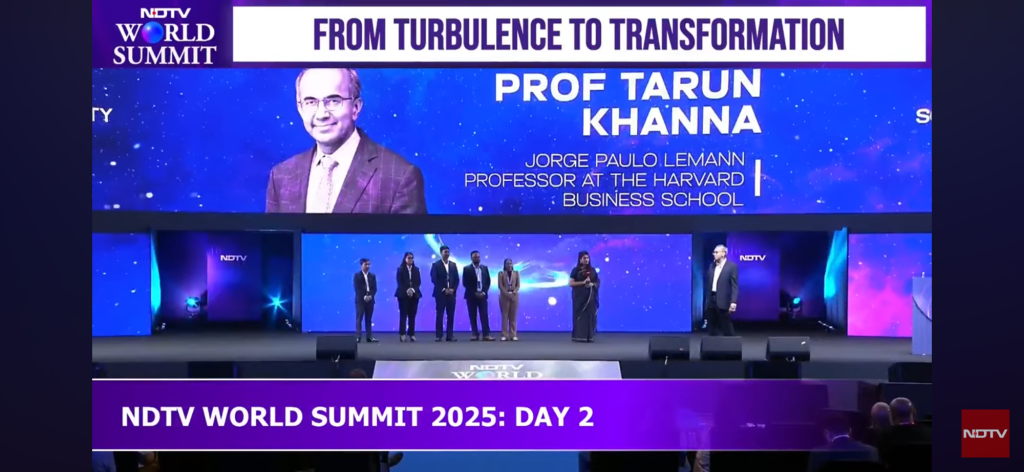
Professor Tarun Khanna of Harvard University co-founded the Aspire Institute in Boston, which works with India’s first-generation college students from low-income backgrounds.
Five students mentored by Prof Tarun Khanna recently attended the NDTV World Summit 2025.
First-generation College Students mentored by Harvard Professor of Indian Origin
-
3 Dimensions of Overseas Education for Indian Students: Academic Knowledge Acquisition, Affordability and Overseas Employment
Migration for Academic Knowledge Acquisition
Migration Data Portal reported that The numbers of internationally mobile students are increasing and destinations diversifying. In 2022, there were an estimated 6.9 million international students globally, a 176 per cent increase over the past two decades, from 2.5 million in 2002.
More than one third (38% or 3 million) of the 6.9 million international students originated from ten countries. Share from China (1,052,000), India (622,000), Uzbekistan (150,000), Viet Nam (134,000), Germany (126,000) and The United States of America (115,000) is notable.
Indian Students in the Overseas
According to data from the Ministry of External Affairs in response to Rajya Sabha QUESTION NO. 2313 INDIAN STUDENTS PURSUING HIGHER EDUCATION ABROAD, the number of Indian students going abroad for studies has steadily increased over the years with a slight dip in 2024.
2022 – 7,52,111
2023 – 8,94,783
2024 – 7,60,073 (Source: Ministry of External Affairs)
Academic Knowledge Acquisition
A research study on “Top Talent, Elite Colleges, and Migration: Evidence from the Indian Institutes of Technology” documented that the incidence of migration among top talent is sizeable. This study results suggest that elite schools play a key role in shaping migration outcomes, both in terms of the overall propensity and the particular migration destination. Among the top 10 scorers, nine have migrated. Among the top 100 scorers, 62% have migrated, and 36% among the top 1000 (Source: Journal of Development Economics Vol. 164, Sept 2023, 103120).
Affordability
It is not an easy finance mechanism for all students. Many students who come from the middle class segment look for financial support through scholarships, teaching/research assistantship, bursaries and loans to fulfill their aspirations for academic knowledge acquisition outside India.
Tighter immigration policies and increase in the living cost for international students in the overseas put more financial responsibilities on the shoulders of parents. Cost of overseas education is increasing year by year due to the rising cost of accommodation and local living expenses.
The PIE reported that Study abroad remittances from India at lowest level in eight years. As per RBI data analysed by The PIE, study abroad remittances from India fell by US $1.37 billion (nearly 58%) between April and August 2021 and the same period in 2025, signalling a steep drop from the post-pandemic peak.
While Indian students’ growing preference for emerging study destinations – including Asian countries like Japan and South Korea, European nations such as Germany, France, Ireland, Italy, and Finland, and Middle Eastern and Central Asian destinations – especially for undergraduate and medical studies, has possibly contributed to lower spending on studying abroad compared to previous years, an increasing number of students are also availing education loans in the country, helping them manage potential extra costs.
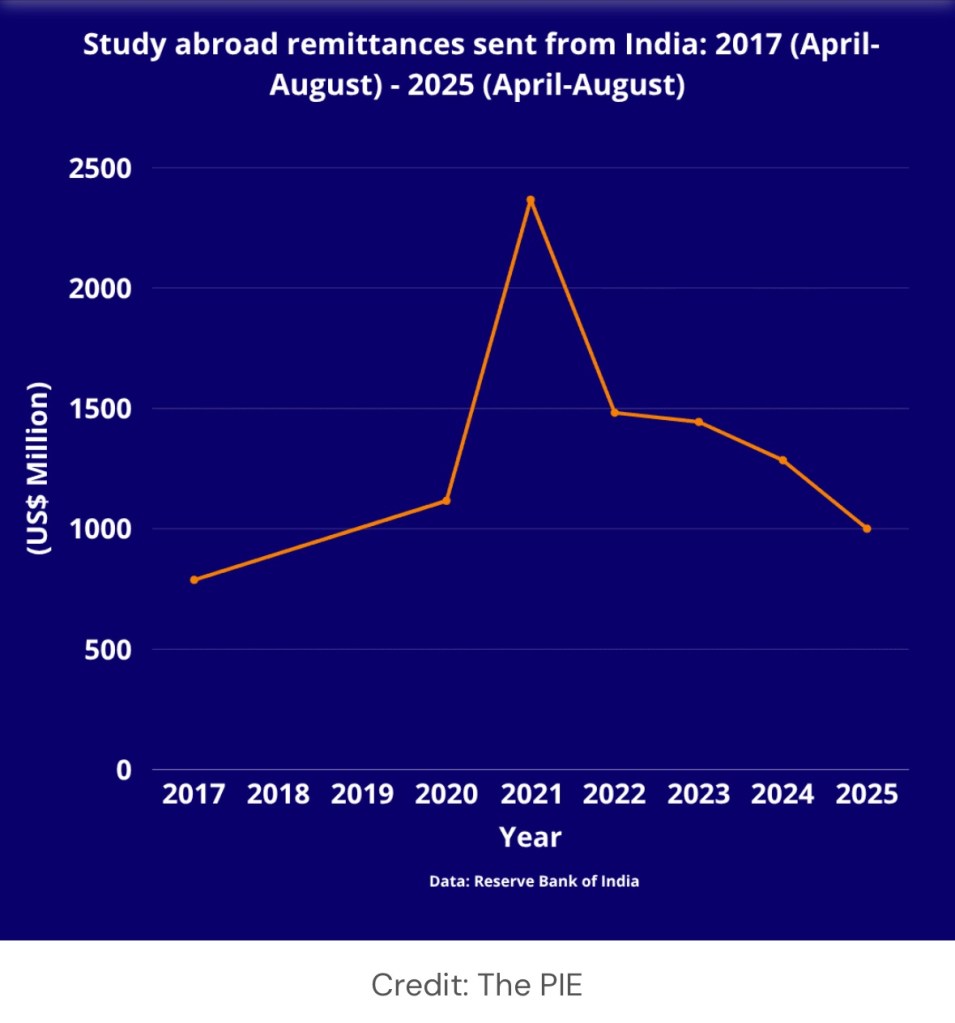
RBI Data Analytics (Source: The PIE) In May 2025, the UK government’s immigration white paper included an intention to explore introducing “a levy on higher education provider income from international students”, which would be reinvested into the higher education and skills system. The white paper said further details would be set out in the 2025 Autumn Budget.
Recent announcement from Australia
Interesting to see the emphasis on elevating Government priorities for partnerships with the regional countries through the International education offered by the native higher education institutions. Cost of living for the international students is increasing year by year. Government interventions in such areas will give financial comforts to the international students who migrate for knowledge aspirations with the self supporting financial resources.
Overseas Employment
Financial Express reported that Indian Students seeking international studies and careers are navigating a rapidly evolving educational landscape. Several countries have introduced new reforms impacting their immigration and student visa policies.
It is not an easy task for the Indian students to find an employment immediately after the completion of their academic courses. ICEF Monitor described this scenario as changes in the immigration policies and employment opportunities hosted by Big 4 countries. Just a couple of years ago, Indian students were flocking to a number of attractive study abroad destinations, and especially to the “Big Four” of Australia, Canada, the United Kingdom, and the United States. Collectively, those four host countries welcomed more than 70% of all Indian students abroad, offering a range of study opportunities, post-study work rights, and the possibility of immigration.
Indian establishments have to come forward in having systems like recruitment drive exclusively for the Indian students coming with the international academic exposure. This will be a win-win situation for everyone who has the aspiration for knowledge acquisition and delivery for enriching the native talent pool.
-
3 Dimensions of Knowledge Economy: Knowledge Capital, Innovation and Inclusive Growth
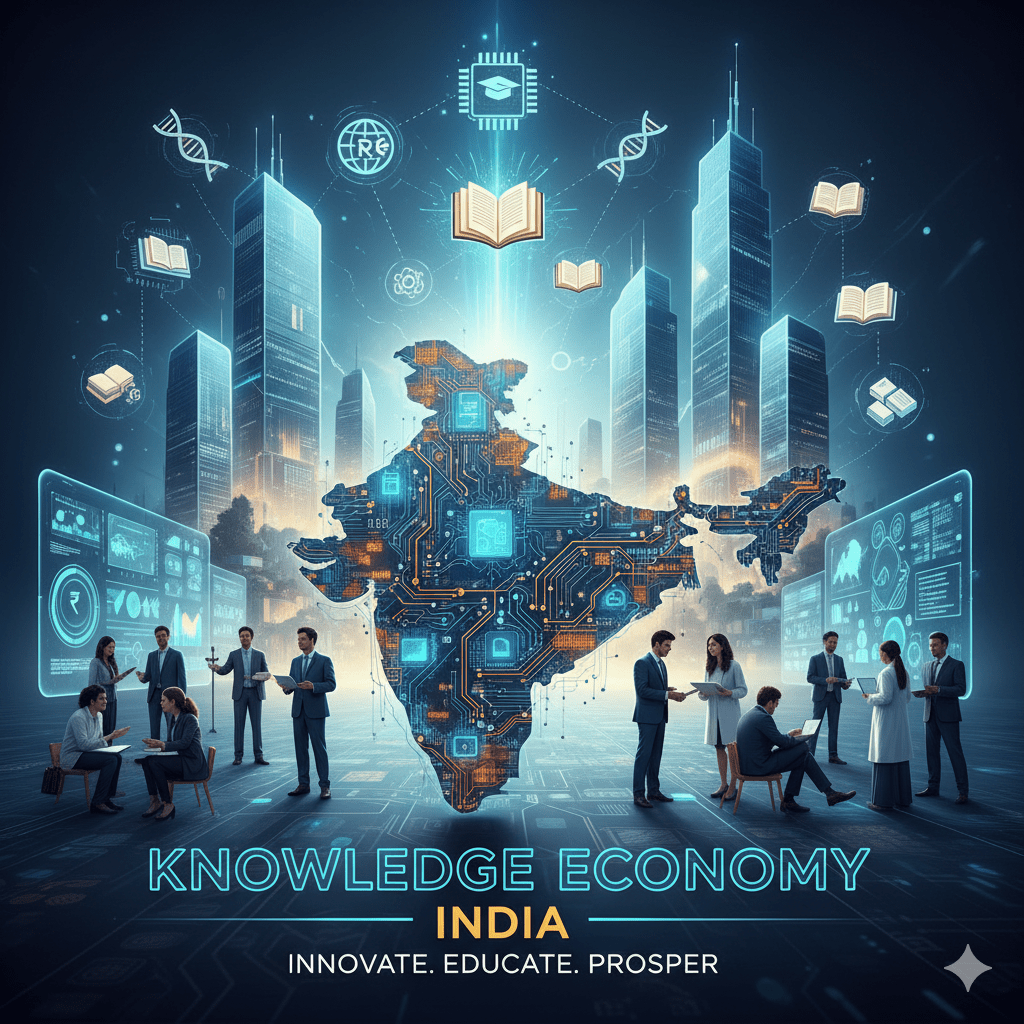
Gross Domestic Knowledge Products of Knowledge Economy GDP to GDKP, the transition getting millions and millions of young talents onboard the Knowledge Economic Development of India.
India’s Knowledge Economy
Knowledge economy develops a framework to yield the best return on knowledge investment for elevating its impacts on economic and social life in the country.
Ministry of Statistics and Programme Implementation describes that Knowledge plays a very critical role in economic development, measurement of domestic knowledge items would provide us with insights into the knowledge structure of an economy, which in turn would help define knowledge policy to steer national economic development to solve the varied socio-economic problems facing the nation. Moreover, India is currently evolving strategies to capitalize on its demographic dividend to make it a developed economy by 2047. Knowledge will play a critical catalytic role in this transition. Thus, quantification of the contribution of these knowledge items/products in the national GDP assumes vital significance.
The Gross Domestic Product of a nation measures the total output of goods and services, the impact of Knowledge creation and its dissemination in economic growth does not get effectively captured as GDP metric is not conceptualized to provide that information. GDP was intended to measure economic activity and thus facets of knowledge embedded in the activities are not given its due prominence (Source: https://www.mospi.gov.in/concept-note )
The World Bank Approach
The World Bank measures knowledge-related economic indicators through metrics like the Knowledge Index to supplement the GDP. GDKP is an alternative measure of a nation’s wealth, focused on knowledge creation rather than traditional goods and services. An economic indicator prepared by the World Bank Institute is to measure a country’s ability to generate, adopt, and diffuse knowledge.
India’s Talent Powerhouse
India’s share in the global talent pool is growing year by year. India’s strength of higher education students in STEM fields contribute in a great way to make the country becoming a hub for digital talent and R&D. However, India’s overall ranking in the Global Talent Competitiveness Index (GTCI) is lower than some developed nations. Migrated Indian S&T Diaspora talent pool take active role in the knowledge based economic programs of developed economies.
Minister of External Affairs Dr Jaishankar said that there is greater interest in the growth of Global Capability Centres (GCCs) in India that take the quality of economic activity to a much higher level (https://www.mea.gov.in/Speeches-Statements.htm?dtl/39466/EAMs_remarks_at_the_launch_of_Global_Access_to_Talent_from_India_New_Delhi_May_06_2025 )
Brain Circulation for Knowledge Transfer
There are currently roughly about 34 million Indians and PIOs living and working abroad. While Developed Economies engage Indian talents for enhancing knowledge based economic development through innovations for the advanced technologies and products, one third of diaspora population is located in the Gulf region housing domestic services, infrastructure development and fossil fuel economic growth, not commonly known for knowledge intensive economic development activities.
Global Diaspora cited as India’s enviable ingredient needs greater push for Brain Circulatory Knowledge Networks to get them connected with the home needs and place them back in the home talent pool through the reverse migration.
Domain specific Knowledge Management Networks connecting Global Indian Diaspora are yet to occupy a space in New World Order. Migration through knowledge path is subjected for severe turbulence in the present world. The reverse migration path needs to be a smooth one protecting the knowledge strengths of Indian diaspora.
Innovation & Entrepreneurship aspirations of the young talents at the school level Atal Tinkering Lab ecosystem will elevate the present innovation networth to attain a convincing knowledge health level in future curtailing the talent flow out of the country.
-
3 Dimensions of Sustainable Economic Growth: Past Knowledge, Free Exchange of Knowledge and Innovation

Borderless Brain Circulation and Free Exchange of Knowledge are the futuristic needs for sustaining economic growth in the geopolitical dominated world.
Economic Sciences Nobel Laureate Joel Mokyr strongly believes in the openness for knowledge transfer to sustain economic growth.
Joel Mokyr views openness and the free exchange of knowledge as crucial for sustained economic growth, arguing that a society must have a culture that values and allows new ideas to circulate, challenge existing structures, and build upon past knowledge. This includes fostering intellectual freedom, a free press, and tolerance, as these conditions are necessary for innovation to thrive and for societies to solve major challenges.
- Subscribe Subscribed
-
-
 முப்பரிமாணம் (Mupparimanam) - 3D development for connecting the ancient and modern thinking with UN SDGs Sustainable Development Goals. 3D thinking on Tamil Literature and Traditional Practices, the source of Global Goals.
- Subscribe Subscribed
- Sign up
- Log in
- Copy shortlink
- Report this content
- View post in Reader
- Manage subscriptions
- Collapse this bar
-
